
ECSS
Standardization objectives, policies and organization
Foreword
This document (ECSS-P-00C) presents the objectives, policy and organization of ECSS together with its architecture and documents.
This Standard has been prepared by the ECSS Technical Authority and approved by the ECSS Steering Board.
Published by: ESA Requirements and Standards Division ESTEC, P.O. Box 299, 2200 AG Noordwijk The NetherlandsCopyright: 2013© by the European Space Agency for the members of ECSS## Change log
|
ECSS-P-00A
|
First issue
|
|
ECSS-P-00B
|
Never published
|
|
ECSS-P-00C
|
Second issue
|
Introduction
Standardization is an important tool to reduce risks, cost and improve both quality and communication between parties during the preparation and execution of programmes. European Space Agencies and industry have in the past individually developed standards and applied them to their projects. The European Cooperation for Space Standardization ECSS) was initiated to harmonize the requirements from existing Standards for space projects, and to provide a single, coherent set of standards for use in all European space systems development and operation.
The goal of the ECSS Standardization System is to develop a common set of consistent standards for hardware, software, information and activities to be applied in space projects, so that life cycle cost are minimized, while continually improving the quality, functional integrity, reliability and compatibility of all elements of the project.
Scope
General
This document states the objectives, policies and organisational structure for establishing, implementing, and maintaining a coherent set of standards for space systems development and operation, created through the European Cooperation for Space Standardization.
ECSS documents are prepared for space projects and applications addressing aspects of:
Project management,
Engineering
Product Assurance, and
Space sustainability
For space sustainability definition, see 3.2.3.
ECSS documents include standards and supporting documents (handbooks, technical memoranda, general support documents such as glossary), together referred to as the ECSS system.
Applicability
This document, being the top level ECSS document, applies to all ECSS activities and products.
Normative References
None.
Terms, definitions and abbreviated terms
Terms and definitions from other documents
Standardized definition of terms for the ECSS Standards are defined in ECSSSST0001 “ECSS system - Glossary of terms”.
For example, the following terms, defined in ECSS-S-ST-00-01, apply to this document:
Standard
Handbook, and
Technical memorandum
Terms specific to the present document
European Cooperation on Space Standardization (ECSS)
co-operative arrangement comprising nominated representatives of European space agencies and industries set up to achieve the objective of developing a comprehensive and coherent set of space standards for direct use in the implementation of space programmes/projects and the development of space products
ECSS developer
organisational structure of ECSS set up to develop and maintain the ECSS system
ECSS system
set of standards, handbooks and technical memoranda for ECSS users, organised in the following branches, for direct use in the implementation of space programmes and projects:
Space project management
Space product assurance
Space engineering
Space sustainability, which encompasses all standards and handbooks for the development of space products, contributing to the long term sustainability of space activities, including orbital debris mitigation, space situation awareness, and planetary protection.
Space sustainability refers to the ability for all countries to continue to use space for peaceful purpose and socio-economic or scientific benefit over the long term.
ECSS developer documents
set of internal ECSS documents defining the organisational structures, roles and responsibilities, processes and rules required to define and implement the ECSS policy and to develop, publish and maintain the documents that make up the ECSS system
standards development organization (SDO)
organisation establishing and/or publishing standards (national, regional, international, sectorial …) which are also available to users outside the standards developing organisation itself
Abbreviated terms
The following abbreviated terms are used in this document:
|
Abbreviation
|
Meaning
|
|
CEN
|
European Committee for Standardization
|
|
CENELEC
|
European Committee for Electrotechnical Standardization
|
|
ECSS
|
European Cooperation for Space Standardization
|
|
EN
|
European standard
|
|
ES
|
Executive Secretariat
|
|
ETSI
|
European Telecommunications Standards Institute
|
|
HB
|
Handbook
|
|
ISO
|
International Organization for Standardization
|
|
SB
|
Steering Board
|
|
SDO
|
standards development organization
|
|
ST
|
Standard
|
|
TA
|
Technical Authority
|
|
TM
|
Technical Memorandum
|
|
WG
|
Working group
|
ECSS objectives
European Cooperation for Space Standardization (ECSS) goal is to provide a set of documents, which have the overall objectives to:
be recognized and accepted by the European space community for use in space programmes/projects;
achieve more cost effective space programmes and projects in Europe in terms of technical performance, life cycle cost-effectiveness and on-time deliveries;
improve the competitiveness of European space sector;
improve the quality and safety of space projects and products;
reduce risk and guarantee interoperability and interface compatibility by applying proved and recognized requirements and methods;
facilitate clear and unambiguous communication between all parties involved in space systems development and operation, in a form suitable for inclusion in legally binding documents;
reflect user needs and feedback of experience from programmes, projects and other appropriate sources to improve ECSS Standards, while preserving internal coherency of ECSS system;
account for new practices, products, technology and missions.
ECSS policies
General
In order to meet the objectives stated in clause 4, the ECSS policy is to:
produce an integrated and coherent set of management, engineering, product assurance and space sustainability standards
covering all activities, phases and levels for the development and operation of a space system, and
based on consensus amongst the ECSS members;
ensure that these standards are structured in such a way that they:
are directly applicable in business agreements;
take into account continual improvement of methods, techniques and technologies;
define requirements in such a way that they bear on the need to be fulfilled rather than on the means to be used to fulfil that particular need, whenever possible;
are based on proven and validated approaches, methods and solutions;
avoid duplication with other standards by incorporating into the ECSS system where appropriate, available documents from other sources;
take into account all valid sources of information, expertise and feedback in the preparation and maintenance of ECSS documents;
make the best use of all available research, including the technology programmes of European space agencies and industry;
take into account in the course of their development, the potential negative impact of space systems, during their complete life cycle, on human life, the environment, public and private property, space and ground investments;
evaluate the benefits resulting from the use of a standard prior to its initiation;
promote the wider usage of ECSS standards. Therefore, ECSS published documents are made freely available worldwide.
ECSS does not provide any warranty nor accept any liability with respect to the use of its documents.
Policy for establishing ECSS System
General
The core of the ECSS System is the complete set of ECSS standards.
Standards can be developed entirely within ECSS or in cooperation with other SDOs.
ECSS standards can be supported/complemented by HBs and TMs.
Policy for establishing ECSS documents
Policy for establishing ECSS standards
ECSS policy is to ensure that ECSS Standards:
respond to a need clearly expressed by the space community, taking full account of the state of the art;
are designed for ease of application by their users and in particular, they shall be as complete as necessary, concise, consistent, accurate and unambiguous;
are comprehensible to qualified persons who have not participated in their preparation and be structured in a way that facilitates essential tailoring for application to specific projects;
contain requirements which benefit the whole space community, which are specific, achievable, relevant, uniquely identified and verifiable, and which do not give exclusive advantage to any individual European organisation;
are not to be considered as stand-alone documents but rather as part of a complete set of normative and reference documents;
avoid duplication of requirements inside and amongst documents;
are developed taking into account contributions from all relevant sources;
are subjected to public review open to all interested parties, before they can be approved;
are structured in such a way that they:
can directly support the formal customer-supplier interfaces and relationships, and address all the levels of the customer-supplier chain;
can be tailored to the technical, cost, schedule, programmatic and economic characteristics of individual space programmes and projects;
address all phases and activities from start to finish of a project;
are drafted, approved and published in English.
In order to ensure uniformity of structure, style and terminology within the full ECSS system, ECSS has established and applies processes and drafting rules (see ECSS-D-00). In addition, in establishing the ECSS glossary, internationally agreed terms and definitions are used, where appropriate.
Policy for establishing ECSS handbooks
ECSS policy is to ensure that ECSS Handbooks:
are developed when need exists to support the application of ECSS standard(s);
describe solution that comply with existing ECSS requirement(s).
Policy for using documents developed by other SDOs
When an already approved and published non-ECSS document (e.g. ISO IS, EN) exists, and is considered useable to fulfil an ECSS objective, this document is either:
copied in whole or in part, with permission, in an ECSS document;
in case of standard, directly called up as normative reference, by ECSS standard(s) and therefore made applicable by the ECSS system;
adopted through an adoption notice in the case where modification, addition, and/or deletion of part of the adopted document is necessary to ensure proper integration of that non-ECSS standard in the ECSS system. Non-ECSS documents can be adopted as standards or handbooks.
The adoption notices follow the same approval process as ECSS standards.
Policy for cooperation with other SDOs
The ECSS policy is to establish co-operation with other SDOs consistent with ECSS objectives, in order to:
achieve international consensus and recognition where essential to allow global interoperability, mission success, safety, protection of the earth, space and their environments, or common policies or treaties;
influence, as early as possible, documents from other SDOs, which could impact ECSS or which are intended to be adopted by ECSS;
maximize cost effectiveness and technical validity for ECSS by incorporating output or expertise from other SDO.
Co-operation between ECSS and other SDOs may fall into one of three categories, as follows:
formal cooperation: cooperation with another organisation conducted under the control of a formal agreement, approved by both parties;
ad-hoc cooperation: activities to interface or cooperate with another SDO or organisation, as a result of a specific SB decision and associated mandate;
liaison: relation with another organisation, typically SDOs, to provide mutual visibility of the activities of ECSS and another organisation. In the frame of liaison level agreements collaborative activities are not necessarily conducted.
Policy for application of the ECSS System
ECSS documents are made applicable to a project only through a legal document such as business agreement (e.g. contract) and/or internal directives. When made applicable:
it is the responsibility of the party imposing a particular standard to tailor it to ensure that it meets the intended need.
all parties using a standard are advised to acquaint themselves with the intended scope and applicability of the standard to prevent inappropriate usage.
the party imposing the use of an ECSS document, or a part thereof, is responsible for monitoring and assuring its correct application.
all users of ECSS documents are encouraged to inform the ECSS Secretariat about experience gained from application of ECSS Standards, so that inadequacies in the documents can be corrected and improvements made.
Details concerning application of the ECSS system are provided in ECSS-S-ST-00.
Policy for maintenance and configuration management of the ECSS System
ECSS implements a maintenance policy which includes:
a fully documented and recorded baseline for the ECSS system and its individual documents.
A change system based on the use of traceable change requests, change request dispositions and their implementation.
a 5 year maintenance cycle at the end of which all standards of the ECSS system shall be re-assessed with respect to the need for updating and reissuing them with a common incremented issue index. During that period, only modifications (technical or editorial) which are strictly needed to guarantee correct application of the standard or to adapt to new factors shall be implemented.
a process to collect feedback and lessons learned from users and developers as a prime source for maintenance of the ECSS system.
a systematic checking of compatibility of modifications introduced in new revisions or issues of documents with already published requirements to maintain internal coherency of the ECSS system.
a configuration management system for ECSS documentation in line with the following principles:
Establish and maintain a Configuration Management index containing current issue and revision status of all ECSS documents and make this available to all interested parties.
apply the configuration management procedure, as defined in ECSS-D-00.
Nomination of Document and Discipline Focal Points to support the Technical Authority for correct understanding and application of the standards and assessment of feedback and Change Requests.
Policy for certification and training
Certification
ECSS neither provides nor recognizes any certification process of supplier or of product according to ECSS requirements, by any party.
Training and users information
ECSS promotes usage of ECSS system in European space projects and beyond through information and, as far as practical, through training of potential users. In addition, ECSS does not endorse the development of third party training courses related to ECSS system.
Policy for promoting the ECSS system
ECSS will promote worldwide usage of ECSS system through all appropriate means: e.g. conference papers, organization of users’ day, dedicated presentations to space related projects or organizations, liaisons with standards development organizations.
In particular, ECSS has developed and maintains a user friendly website enabling both ECSS standards developers and users to get fully up-to-date information.
Policy for translation of ECSS documents by ECSS members
ECSS documents are written and published in English language only. Any ECSS member wishing to translate, at its own expense, an ECSS document into another language may do so, provided that such intent is made known to the ECSS Secretariat and this ECSS member remains the sole responsible for the coherence between the English version and the translated one. Such translated documents are not part of the ECSS system. They shall bear a different identification number than the original ECSS document and shall separately identify which ECSS Standard has been used. In no way shall approval of the ECSS Steering Board, nor any duty of distribution by the ECSS Secretariat, be stated or implied for such translations, nor may such documents be sold.
ECSS does not recognize nor maintain translated version of the ECSS original documents in English.
Policy for use of ECSS System by non-ECSS members
The European Space Agency, on behalf of the participating members, holds copyright for all ECSS documents. No ECSS document may be reproduced in any form without the explicit consent of ESA. However, this consent is granted to ECSS members for their own use, for their contractors and subcontractors.
In case of request by non-ESA members or non-ECSS members for using ECSS documents in whole or in part in their own documentation, the following policy shall be applied:
direct use of ECSS standards themselves should be made rather than rewriting using quotation of ECSS standards. This could avoid incoherencies with ECSS system due to partial imports of ECSS requirements, modified quotations or quotation of obsolete versions.
ECSS members are informed of requests addressed to the ES. Final version of the proposed agreement to grant use and/or translation should be submitted to SB approval and, when approved, signed by the SB chairman on behalf of ECSS members (Copyright on ECSS standards being held by ESA on behalf of ECSS members, final agreement are also to be signed by ESA appropriate official).
when ECSS documents text is used, ECSS copyright is acknowledged, quotations clearly identified in the document together with exact reference/version and potential modifications of ECSS standards used as source. This applies also to any derived document.
when translation of ECSS standard(s) is performed by the beneficiary, this translation should be made available to ECSS members.
ECSS organization
Participation
General
ECSS is open to participation from all European space sector and associated organizations. Participating entities in ECSS can have a role of Members, Associates or Observers.
Agreement to work in the interest of ECSS, to pursue the ECSS objectives and policies and to follow rules as set out in the ECSS Operating Documents (ECSS-P-00 and ECSS-D-00) is required from all participating organizations.
Full members
ECSS Full members are European space sector stakeholders that indicate their intention to actively participate in ECSS document production, maintenance, use and the associated feedback. They commit to:
provide an adequate level of support for all these activities,
ensure the implementation of ECSS system in their respective projects when applicable.
Any member from the European space industry will participate through Eurospace.
Only Full members take part in the consensus process within ECSS, as specified in 6.3a.
At the time of the approval of this issue of ECSS-P-00, the following organisations were Full members: Agenzia Spaziale Italiana, Centre National d’Etudes Spatiales, Deutsches Zentrum für Luft- und Raumfahrt e.V., European Space Agency, Eurospace, Netherlands Space Office, Norwegian Space Centre, UK Space Agency.
Associates
ECSS Associates are those European space sector stakeholders that indicate a desire to participate in ECSS document production but at a reduced level of effort or limited to some specific aspects/disciplines, and that commit to implement ECSS system in their respective projects when applicable for those documents whose preparation they were involved in.
Associates are encouraged to provide feedback on their use of the ECSS standards by CR’s or other means.
Associates will be given access to specific ECSS body as per ECSS Technical Authority proposal and when approval is given by the ECSS Steering Board.
At the time of the approval of this issue of ECSS-P-00, the following organisations were Associates: Canadian Space Agency.
Observers
Observers are those European space sector stakeholders desiring a formal tie with the ECSS through which they can observe the development process of technical documentation and through which they can contribute to the ECSS system (e.g. need for new standards, return of experience related to ECSS system application in projects).
Their participation to the production, review of documents is not envisaged but not excluded.
Observers will be given access to specific ECSS body as per ECSS Technical Authority proposal and when approval is given by the ECSS Steering Board.
At the time of the approval of this issue of ECSS-P-00, the following organisations were observers: EUMETSAT, European Defence Agency, CEN/CENELEC.
Accession by new participating organizations
Request for participation or change of status shall be sent in writing to the ECSS Secretariat, stating the formal acceptance of the conditions laid out in the relevant clauses 6.1.1 to 6.1.4. The Steering Board decides on such requests by consensus of its members. Accession or change of status takes place on the date of notification by the ECSS Secretariat that the Steering Board has approved their participation.
Termination of participation
A participating organization may terminate its participation in ECSS by written notification to ECSS Secretariat, who informs the ECSS Steering Board. The termination becomes effective three months after receipt of the notification in the ECSS Secretariat. Such participating organization shall endeavour to minimize the effects of the termination on ECSS.
If, in the opinion of two thirds of all members, a participant no longer complies with relevant clauses 6.1.1 to 6.1.4, its participation is terminated with immediate effect.
Change of status
A participating organization may change its status according to the following rules:
For changing status from Observer to either Associate or Full Member or from Associate to Full Member, the principles laid down in 6.1.5 shall be followed.
For changing status from Full Member to either Associate or Observer or from Associate to Observer, the principles laid down in 6.1.6 shall be followed.
ECSS Developer Structure
Overview
The ECSS activities are organized through a number of bodies, collectively known as the ECSS Developer, whose main functions are as follows:
Steering Board (SB): Define ECSS objectives, policy and strategy and endorse the work plan
Technical Authority (TA): Implement the objectives, policy and strategy defined by the SB; setup, approve, implement and monitor the Work-plan endorsed by the SB
Executive Secretariat (ES): Support the TA and WGs, enforces drafting rules, provide administrative support to the TA and SB, and ensure promotion of ECSS and interface with other SDOs.
Working Group (WG): Convened as necessary by TA and in charge of producing/modifying the standards as required by the endorsed Work-plan.
Network of Expert (NoE): Document and Discipline Focal Points that, with the addition of ad hoc experts, support TA and ES in specific tasks.
Figure 61 presents the ECSS developer structure.
In addition to the above and in line with the bodies responsibilities, task forces may be created by the SB or TA, to assist in executing their responsibilities, and are normally used to investigate and make recommendations on a particular aspect or issue related to ECSS activities. Their mandate is usually of limited duration.
The organisation of ECSS bodies, together with ECSS developer responsibilities, documentation and processes is addressed in ECSS-D-00.
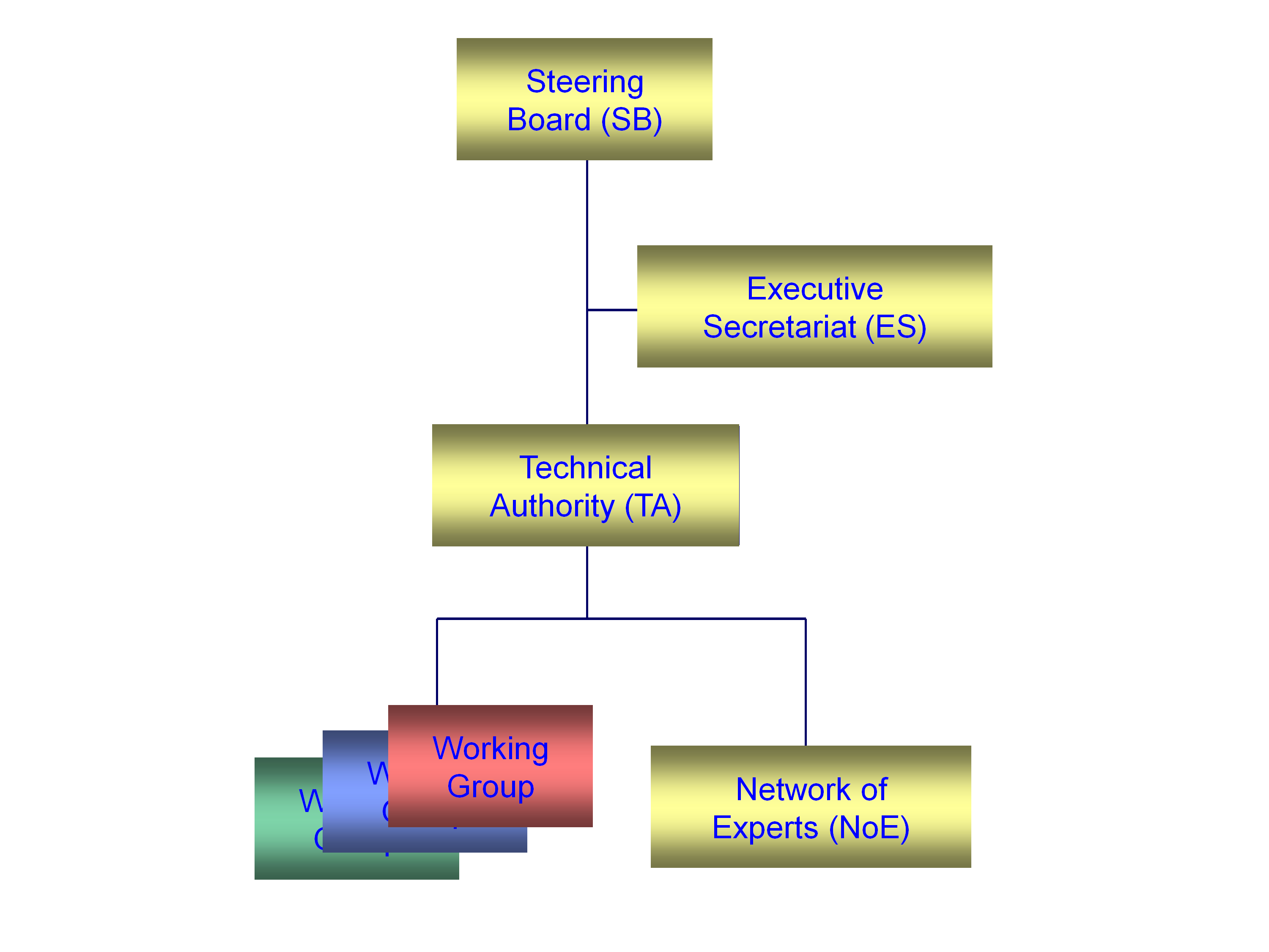 Figure 61: ECSS developer structure
Mission statements of the ECSS bodies
Steering Board (SB)
The SB is mandated by the participating member organizations to define the objectives, policy and strategy for the ECSS system and for providing overall leadership of the ECSS bodies.
The SB decides whether ECSS shall cooperate with other SDOs, which type of cooperation, and endorses the cooperation agreement prepared by the TA.
Technical Authority (TA)
The activity of the TA is guided and monitored by the SB.
The TA is the technical approval authority for the initiation and release of new ECSS documents as well as for all changes to existing ECSS documents.
It is in charge to setup and implement the Work-plan with the support of the ES. Furthermore, TA proposes the Work-plan to SB for endorsement.
Following interest expressed by any ECSS partner or other SDO for a co-operative agreement, the TA:
assesses the impact of formal cooperation, and submit recommendation to the SB, including the proposed methodology and process for implementation;
if endorsed by the SB, set-up cooperation agreement, liaising with the other parties as necessary.
Executive Secretariat (ES)
The mission of the ES is composed of four items:
Programme function in support to TA to:
build the Work-plan to be endorsed by the SB (e.g. programmatic, resources);
monitor and support the implementation of the Work-plan including finalization and notification of the publication of ECSS documents/events;
ensure implementation and perform monitoring of the ECSS processes (including those to gather feedback from users and lessons learned).
Support WGs and enforce drafting rules.
Custodian and configuration control of the ECSS documents;
Ensure the promotion of ECSS and interface with other SDOs;
Provide administrative support to SB and TA.
Working Group (WG)
The mission of an ECSS Working Group is to carry out the tasks necessary to draft or update an ECSS Document in line with its Terms of Reference, against an agreed planning and schedule. They are built on a case by case basis, managed by the TA through a limited duration mandate.
Network of experts (NoE)
The network of experts is a pool of experts appointed by the TA and supported by the ECSS organizations nominating them. They act for specific mission/action through the sponsorship of the TA members or their nominating organization.
The NoE is composed by the Document and Discipline Focal Points and ad hoc experts, providing support in specific tasks. The NoE are not an advisory body intended for the general public. Their support is restricted to the SB, TA and ES.
ECSS decision making process
In this document consensus is defined as not only a way to seek the agreement of most participants, but also to resolve or mitigate the objections of the minority to achieve the most acceptable general agreement. As a consequence, minority views are considered to a greater degree than where a majority can take a decision and enforce it without any further consideration of the minority views.
The ECSS governing bodies (i.e. the ECSS SB and TA) make decisions on the following basis:
After having considered the position of all Full members, associated and observers, the governing body works on the basis of achieving consensus of the voting members (i.e. full members).
If consensus as stated in a.1 above cannot be achieved, decisions are made by the vote of the full members, with a simple majority subject that a quorum of 50% of the voting rights is reached.
Votes are weighted in accordance with the following principles:
One (1) vote for each ECSS full member National Space Agency.
Four (4) votes for the European Industry, represented by Eurospace.
Eurospace can decide to appoint four Eurospace voting representatives, with one voting right each, or to concentrate the four votes with a voting representative, or any intermediate solution.
ECSS WGs make all decisions on the following basis:
- by achieving consensus of all the WG members officially approved by the ECSS TA.
- If consensus, cannot be achieved on a particular issue, the matter is escalated to the TA for resolution. Implementation details of these principles can be found in Chapter 4 of ECSS-D-00 “ECSS organization and processes”.
ECSS Documentation
Overview
ECSS documentation is divided into 2 categories:
Documents for developers of standards specifying objectives, policies, processes, rules, standard forms;
Documents for users, composed of standards and supporting documents, which collectively form the ECSS System, addressing the aspects of:
ECSS system description and implementation,
Space project management,
Space product assurance
Space engineering, and
Space sustainability.
For space sustainability definition, see 3.2.3.
Documentation for developers
Architecture of ECSS documentation for developers of standards is depicted in Figure 71:
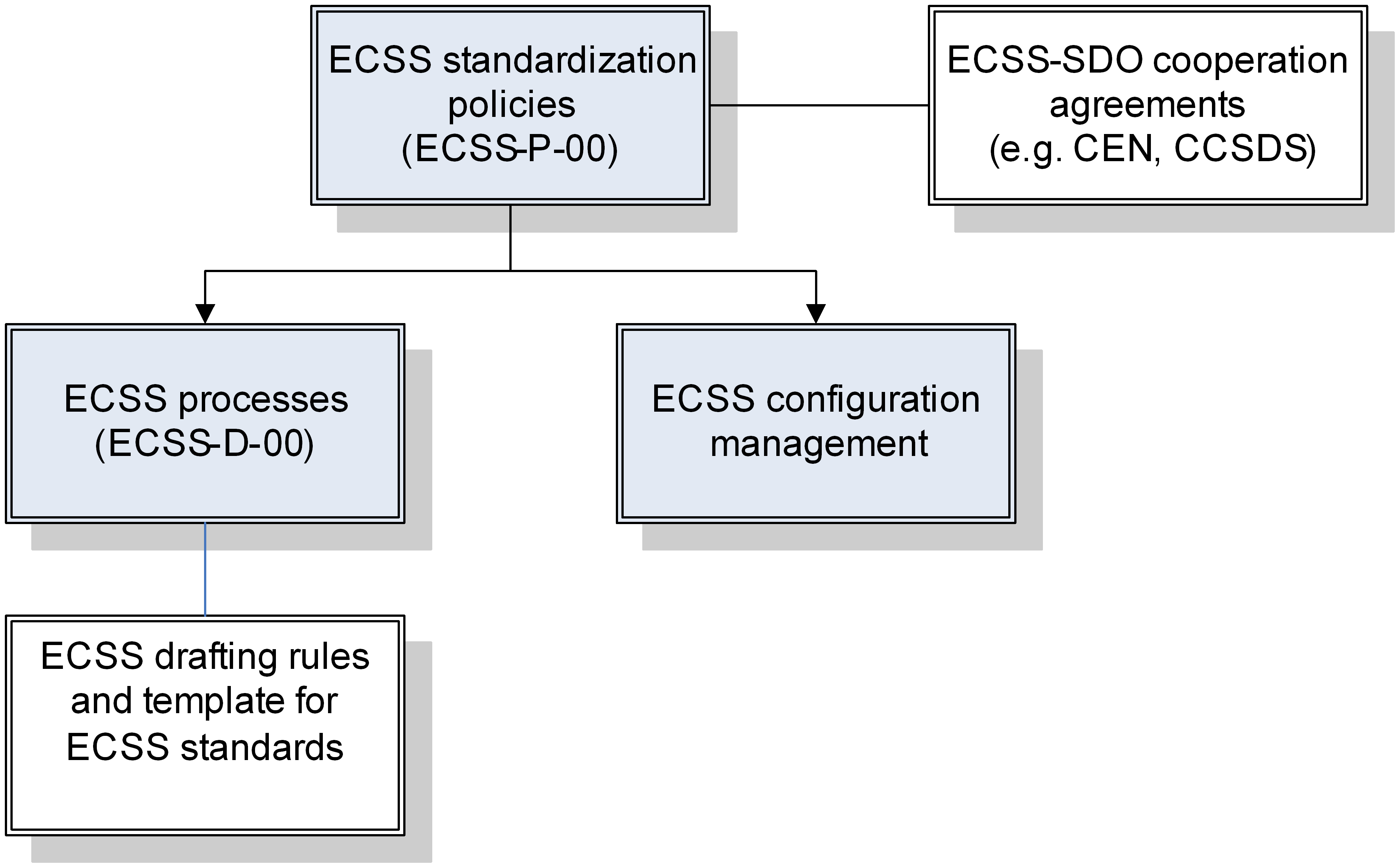 Figure 71: Architecture of ECSS documentation for developers
The present document (ECSS-P-00: Standardization policy) is the highest level document providing objectives and policies applicable to the development, maintenance and deployment of standards, handbooks and technical memoranda, and defining the ECSS structure. The cooperation agreements between SDOs and ECSS are kept/archived by ES and constitute essential elements for the implementation of the actual ECSS policy.
All the ECSS internal processes are specified in ECSS-D-00. This document also identifies all the items which are under configuration control by ECSS, together with the stage at which they have to be put under configuration control.
The ECSS drafting rules and template for ECSS standards and for handbooks are specified in ECSS-D-00-01 and ECSS-D-00-02 respectively. They specify all the editorial rules necessary to guarantee high quality and maintainability of the ECSS system.
An ECSS configuration management document specifies the configuration control system and processes for the ECSS system.
In order to keep consistency between the two documentation sets, the document for users: “ECSS Glossary of terms” described in 7.3 is also applicable to developers.
Documentation for users (ECSS System)
The architecture of the ECSS system, shown in Figure 72, is composed of:
A System description and implementation standard (ECSS-S-ST-00) which specifies how to use the ECSS system in a given project;
A Glossary of terms (ECSS-S-ST-00-01) which provides definition of terms common to several ECSS standards (terms specific to a standard are defined locally in that standard);
Standards (ST), Handbooks (HB) and Technical Memoranda (TM) organized to cover: space project management, space product assurance, space engineering and space sustainability. Inside each branch, the three types of documents are classified in disciplines. For each discipline, a top level standard provides all the general requirements related to that discipline, while other documents cover specific aspects, processes, products within a given discipline.
Detailed descriptions of the architecture, content and ECSS disciplines are provided in clause 5.3 of ECSS-S-ST-00.
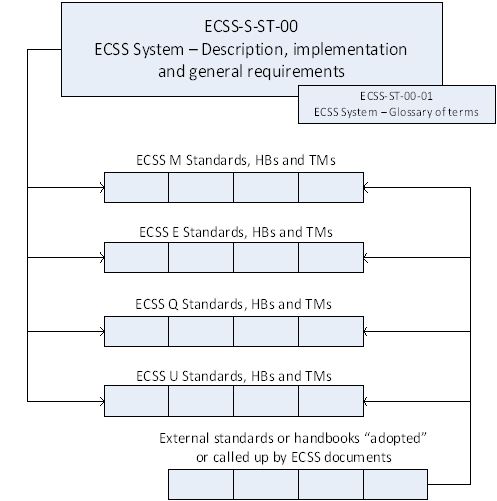 Figure 72: General Architecture of ECSS documentation for users
Bibliography
|
ECSS-D-00
|
ECSS – ECSS processes
|
|
ECSS-D-00-01
|
ECSS - Drafting rules and template for ECSS Standards
|
|
ECSS-D-00-02
|
ECSS - Drafting rules and template for ECSS Handbooks
|
|
ECSS-S-ST-00
|
ECSS system - Description, implementation and general requirements
|
|
ECSS-S-ST-00-01
|
ECSS system – Glossary of terms
|