
Space product assurance
Off-the-shelf items utilization in space systems
Foreword
This Standard is one of the series of ECSS Standards intended to be applied together for the management, engineering and product assurance in space projects and applications. ECSS is a cooperative effort of the European Space Agency, national space agencies and European industry associations for the purpose of developing and maintaining common standards. Requirements in this Standard are defined in terms of what shall be accomplished, rather than in terms of how to organize and perform the necessary work. This allows existing organizational structures and methods to be applied where they are effective, and for the structures and methods to evolve as necessary without rewriting the standards.
This Standard has been prepared by the ECSS-Q-ST-20-10C Working Group, reviewed by the ECSS Executive Secretariat and approved by the ECSS Technical Authority.
Disclaimer
ECSS does not provide any warranty whatsoever, whether expressed, implied, or statutory, including, but not limited to, any warranty of merchantability or fitness for a particular purpose or any warranty that the contents of the item are error-free. In no respect shall ECSS incur any liability for any damages, including, but not limited to, direct, indirect, special, or consequential damages arising out of, resulting from, or in any way connected to the use of this Standard, whether or not based upon warranty, business agreement, tort, or otherwise; whether or not injury was sustained by persons or property or otherwise; and whether or not loss was sustained from, or arose out of, the results of, the item, or any services that may be provided by ECSS.
Published by: ESA Requirements and Standards Division ESTEC, , 2200 AG Noordwijk The Copyright: 2010© by the European Space Agency for the members of ECSS## Change log
|
ECSS-Q-ST-20-10A
|
Never issued
|
|
ECSS-Q-ST-20-10B
|
Never issued
|
|
ECSS-Q-ST-20-10C
|
First issue
|
Scope
This Standard applies to all parties involved at all levels in the utilization of OTS items into space segment hardware and launchers.
For the purpose of this Standard, Off-the-Shelf (OTS) Items are those that, even if not necessarily developed for space applications, can be procured from the market and utilized in a space system.
This Standard contains the requirements for the utilization of OTS Items, in terms of their selection, characterization and procurement for space system use.
This Standard considers complex OTS items, as for example: motherboards, cards, data storage units/items, optical equipments, photo cameras and video units, LANs, mechanical/electrical and electromechanical devices, batteries, sensors, monitoring support units, medical equipments and items, laptops.
This Standard does not cover:
software OTS,
re-use of OTS items already qualified for space applications,
However, items not belonging to the same lot of the OTS item already evaluated using this standard, can be subjected to partial re-evaluation and re-qualification since, on the commercial market, fast evolution of the design occurs.
Pieces, parts and materials, such as electrical, electronic and electromechanical (EEE) parts, thermocouples, rivets, fasteners, connectors, fittings, adhesives, insulation, wiring and plumbing.
This standard is not specifically addressing the re-use of OTS items for the same space application for which they were initially qualified.
This standard may be tailored for the specific characteristic and constrains of a space project in conformance with ECSS-S-ST-00.
Normative references
The following normative documents contain provisions which, through reference in this text, constitute provisions of this ECSS Standard. For dated references, subsequent amendments to, or revision of any of these publications do not apply. However, parties to agreements based on this ECSS Standard are encouraged to investigate the possibility of applying the more recent editions of the normative documents indicated below. For undated references, the latest edition of the publication referred to applies.
|
ECSS-S-ST-00-01
|
ECSS System - Glossary of terms
|
|
ECSS-E-ST-10
|
Space engineering - System engineering general requirements
|
|
ECSS-E-ST-10-02
|
Space engineering - Verification
|
|
ECSS-E-ST-10-12
|
Space engineering - Methods for the calculation of radiation received and its effects, and a policy for design margins
|
|
ECSS-E-ST-20
|
Space engineering - Electrical and electronic
|
|
ECSS-E-ST-31
|
Space engineering - Thermal control general requirements
|
|
ECSS-E-ST-32
|
Space engineering - Structural general requirements
|
|
ECSS-E-ST-50-05
|
Space engineering - Radio frequency and modulation
|
|
ECSS-E-ST-50-14
|
Space engineering - Spacecraft discrete interfaces
|
|
ECSS-Q-ST-20
|
Space product assurance - Quality assurance
|
|
ECSS-Q-ST-60
|
Space product assurance - Electrical, electronic and electromechanical (EEE) components
|
|
ECSS-Q-ST-70
|
Space product assurance - Materials, mechanical parts and processes
|
|
ECSS-Q-ST-70-28
|
Space product assurance - Repair and modification of printed circuit board assemblies for space use
|
Terms, definitions and abbreviated terms
Terms from other standards
For the purpose of this Standard, the terms and definitions from ECSS-S-ST-00-01 apply.
Terms specific to the present standard
manufacturer
industrial subject that has developed and produced the OTS item and makes it available on the market
Abbreviated terms
For the purpose of this Standard, the abbreviated terms from ECSS-S-ST-00-01 and the following apply:
|
Abbreviation
|
Meaning
|
|
CIDL
|
configuration item data list
|
|
CoC
|
certificate of conformance
|
|
DML
|
declared material list
|
|
DPL
|
declared process list
|
|
DRD
|
document requirements definition
|
|
EEE
|
electronic, electrical, electromechanical
|
|
EMC
|
electromagnetic compatibility
|
|
EMI
|
electromagnetic interference
|
|
ESD
|
electrostatic discharge
|
|
EQSR
|
equipment qualification status review
|
|
FMEA
|
failure modes effects analysis
|
|
ISO
|
International Organization for Standardization
|
|
ITAR
|
International Traffic in Arms Regulation
|
|
LCC
|
life cycle cost
|
|
LET
|
linear energy transfer
|
|
LU
|
latch up
|
|
MTTF
|
mean time to failure
|
|
NIEL
|
non-ionising energy loss
|
|
OTS
|
off-the-shelf
|
|
PAD
|
part approval documents
|
|
PDR
|
preliminary design review
|
|
PCB
|
printed circuit board
|
|
QSL
|
qualification status list
|
|
RAM
|
reliability, availability, maintainability
|
|
RFD
|
request for deviation
|
|
RFW
|
request for waiver
|
|
SEE
|
single level effect
|
|
SEU
|
single event upset
|
|
SRR
|
system requirements review
|
|
STD
|
standard
|
|
TID
|
total ionising dose
|
|
VCD
|
verification control document
|
Principles
Structure and organization of OTS item selection process
Market investigation and OTS items identification
When a supplier decides upon the possibility of using OTS items, it is necessary that from the very beginning a preliminary equipment specification be issued. In parallel to this an OTS Plan is prepared.
At this point, the relevant market survey can be started.
For each OTS item candidate an evaluation dossier is initiated and all these OTS item candidates are compared to the project requirements in order to have a preliminary make or buy decision.
As an input to the System SRR, a preliminary OTS make/buy decision milestone identifies a restricted number (maximum three) of OTS item candidates for which the buy approach is viable. Refer to Figure 41 first sector.
The liability for introducing an OTS Item into the Project remains always with the design authority which is in charge of the make-or-buy decision.
OTS item characterization and selection
After the System SRR, the updated equipment specification and OTS Plan is used as input to the characterization of each OTS item candidate.
During the characterization the OTS item candidates are deeply investigated in order to assess their performance and qualification status and to identify any possible modification to be introduced in the OTS item or in the system hosting it and any delta qualification activity.
The OTS item evaluation dossiers are incrementally updated to reflect the results of these investigations; at the end the best suitable OTS item candidate is selected, and all related modifications and delta qualification activities are identified thus confirming that the OTS item is qualifiable.
The OTS item evaluation dossier of the selected candidate, together with the equipment specification and the OTS Plan, both updated for PDR, are used to support the final make-or-buy decision milestone at the System PDR.
Refer to Figure 41 second sector.
OTS item procurement and qualification
After the final make-or-buy decision milestone at the System PDR, if the “Buy“ decision has been taken, the procurement activities can start.
Since this ECSS is not dealing with the simple re-procurement of already space qualified OTS Items, two options for procurement can be envisaged:
OTS Items for qualification and OTS Items for flight are procured at different times;
Both OTS Items for qualification and for flight are procured at the same time.
The supplier selects which option is the best based on the relevant Project programmatic needs.
Regardless of the procurement option selected, the Supplier then performs the necessary qualification and acceptance related activities as per the Project applicable requirements, detailed inside the OTS plan and the equipment specification.
The qualification phase ends when the selected OTS Item has reached the Qualification status requested by the Project.
The output of this phase is the completed OTS Item Evaluation Dossier that is used to support the OTS Item Qualification status assessment.
Procurement of flight units, when the flight hardware is procured separately from the one used for qualification, is then initiated.
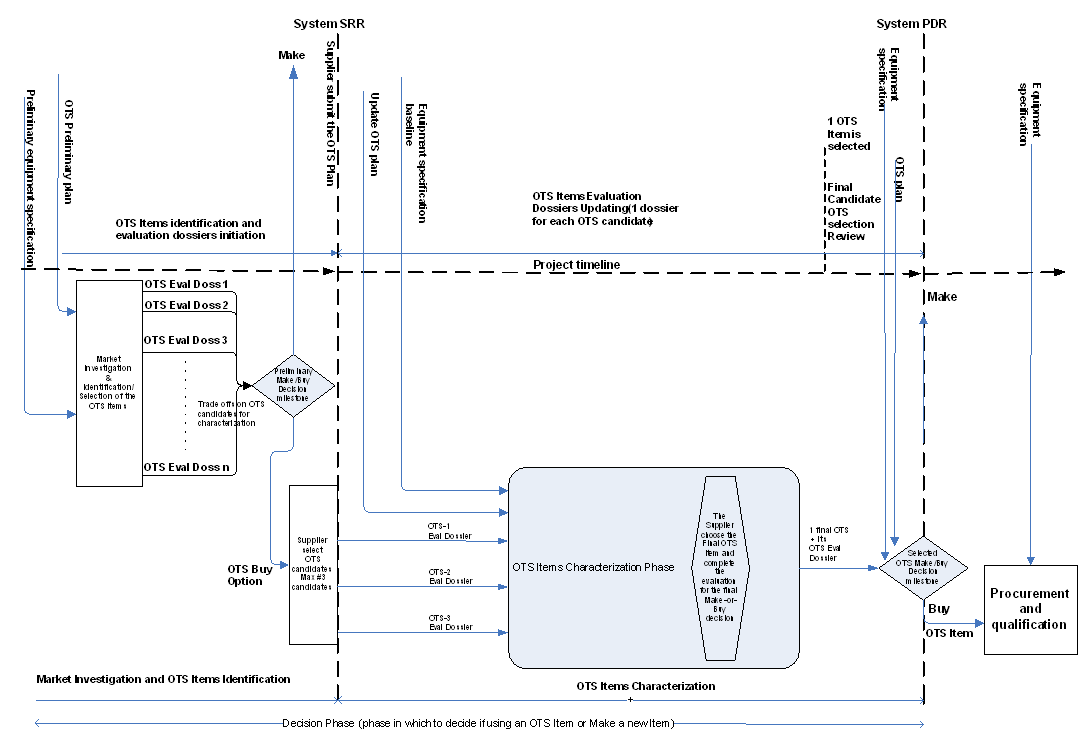 Figure 41: OTS items selection process flow
Requirements
Documentation
OTS plan
A dedicated OTS plan shall be established in conformance with the DRD in Annex A.
The OTS plan describes the OTS item process selection, characterization and qualification activities in accordance with the contents of this ECSS Standard. The contents is specified in the annex DRD.
The supplier shall submit an OTS plan with the proposal, but not later than the system SRR.
The OTS item review selection process shall be synchronized with project review planning as per Figure 41.
Equipment specification
The supplier shall generate and maintain an equipment specification with clear allocation of requirements for the OTS item and submit it for approval to the customer.
The supplier shall submit the preliminary equipment specification at the beginning of the OTS item identification phase and deliver it to the customer for review at system SRR.
The preliminary equipment specification shall be used as a technical reference for the market investigation and OTS item identification.
The equipment specification shall be formalized after SRR and shall be used during the OTS item characterization and selection.
The PDR issue of the equipment specification shall be used as an input to the final make-or-buy decision.
OTS item evaluation dossier
For each OTS item candidate, an OTS item evaluation dossier, in conformance with the DRD in Annex B, shall be established during the market investigation and OTS Item identification.
The OTS item evaluation dossiers shall be used to support the trade-off decision leading to the first preliminary Make/Buy decision point prior to SRR.
The OTS item evaluation dossiers of the remaining candidates shall be used to support the OTS items characterization and selection up to the final Make/Buy decision point at the system PDR.
After the Buy decision has been taken, the evaluation dossier of the selected OTS item shall be maintained and updated to include all the results of the qualification phase.
Market investigation and OTS item identification
OTS item identification
Market investigation
In order to evaluate the possible use of OTS item the supplier shall investigate the existence of products already successfully qualified in similar application.
If as result of project investigation specified in 5.2.1.1a, no space qualified products are found, and the intention to use OTS Items is confirmed, the supplier shall extend the market survey to high quality and reliability products, to narrow down the selection of candidate OTS items to qualified manufactures and traceable production processes.
Exampled of high quality and reliability products are, for instance, aeronautics, military, and nuclear.
OTS item criticality
The supplier shall identify if the OTS item is proposed for use in a safety or mission critical function.
The supplier shall identify any potential criticality involved with the use of the OTS item.
OTS item data collection
The supplier shall exclude a priori any OTS item whose performance has been previously reported as non-satisfactory.
When the OTS item is still affected by an active alert or equivalent industrial practices.
The supplier shall propose an OTS item which is designed for aerospace or military application in preference to an OTS item which is not.
The supplier shall identify any deviation of OTS item candidates from the equipment specification requirements.
The supplier shall identify all the OTS item functions which can lead to negative effects.
The supplier shall verify with the OTS item manufacturer the design margins, and prefer those determined by test.
The supplier shall gather all the available qualification data of the OTS item candidates.
The supplier shall collect all the available data relevant to the manufacturer in order to evaluate its experience, position and stability in the business, and OTS item commercial business practices, strategies in development, maintenance, distribution of updates, availability of spares, willingness to co-operate with the supplier.
The supplier shall collect all the information to allow the rough estimation of the OTS item cost, taking into account all aspects.
Preliminary Make-or-Buy decision point
Market investigation output
Based on the data collected during the market investigation the supplier shall decide, prior to the system SRR, if to propose a “buy” approach on the basis of the existence of viable OTS items in a minimum number of two.
When several viable OTS item candidates exist, the supplier shall perform a trade-off activity to reduce their number to a maximum of three.
Trade-off
The trade-off activities shall be based as a minimum on the following criteria:
- OTS item ability to provide the required capabilities and performances and to cope with the system design constraints;
- OTS item compliance with the PA and Safety applicable project requirements;
- OTS item compliance versus the function criticality at system level;
- OTS item testability;
- OTS item compliance with the interface requirements;
- OTS item ability to be procured and used without special restrictions;
- ITAR, exportability, and copyright;
- Short and long term cost impacts of using the OTS item;
- Technical, cost and schedule risks in using the OTS item;
- Availability of OTS item certification documentation;
- Proper tracking of configuration changes;
- Manufacturer experience, position and stability in the business, willingness to cooperate, possibility to place contractual arrangement for supporting the system development and maintenance phase;
- Manufacturer quality system;
For example: The OTS item manufacturer can demonstrate a track record for production, Quality control procedures are established.
- Obsolescence possibilities and back-up solutions;
- OTS item life cycle support.
For example: Availability of spares, refurbishment possibilities, service experience supporting the successful operation of the OTS item, Repair capability.
OTS characterization
General
The supplier shall perform the OTS item characterization activity with respect to the equipment specification ensuring that all the requirements are met.
In the frame of the OTS item characterization of requirement 5.3.1a, the supplier shall collect in the evaluation dossier the following:
- available users documentation;
- manufacturer data sheet derived requirements and their validation and verification;
- available qualification status versus preliminary equipment specification;
- available test data;
- existing anomalies, non conformance reports and problem reports;
- potential evolutions;
For example: Future manufacturer modifications.
- results of the PA activities evaluation as per clause 5.3.2.
The supplier shall evaluate and agree the system architecture modifications that allow the usage of the OTS items minimizing the need of OTS item modification.
The output of the OTS item characterization phase shall be the make-or-buy decision.
Product assurance evaluation for OTS item characterization
Dependability
Criticality
The supplier shall verify the system level RAM analyses to identify if the OTS item is used in critical functions and request customer approval for its application.
The supplier shall assess the dependability criticality of the OTS item on the basis of the specific application.
For example (in order of increasing criticality): Experiments or payload; satellites; manned modules; launchers; re-entry vehicles.
The supplier shall identify the dependability technical risks in satisfying dependability requirements.
FMEA / FMECA
The supplier shall analyse the OTS item in the FMECA as a black box.
This in order to assess functions and interfaces criticalities versus the system requirements.
The supplier shall get the analysis from the manufacturer when available or consult the available analysis or design files at manufacturer site.
Item monitors
The supplier shall collect the information from manufacturer on the OTS item monitoring status.
The supplier shall provide dedicated interfaces towards the OTS item via ad-hoc data interface unit.
The supplier shall co-ordinate with the first level supplier the compensations for the missing monitoring.
OTS item operability
The supplier shall verify capability to control the item in all operational conditions to prevent failures and hazards.
The supplier shall verify the capability to switch-off the item in all conditions, considering also the case of internal item battery provision.
The supplier shall verify compatibility of OTS item warmup time with respect to system performances.
Installation and maintenance
The supplier shall identify OTS item maintenance requirements.
The supplier shall identify provision of installation and maintenance features to prevent failure.
The supplier shall verify the possibility that the manufacturer can provide spares throughout the project duration.
Internal redundancy / design for minimum risk
When evaluating the OTS item internal redundancy, the supplier shall ensure that the project failure tolerance requirements are complied with.
The supplier shall not use internally redundant OTS items without the availability of the following information:
- the reliability history;
- OTS item internal redundancy management and architecture. The supplier shall provide all the missing information on the internal redundancy and design to minimum risk on the OTS item.
For example: X-ray, NDI inspections, proof test, and functional test.
Reliability figure
The supplier shall provide an OTS item reliability figure to support system-level reliability assessments or engineering trade-offs.
If the reliability figure is not provided by the manufacturer, it can be obtained e.g. by the following means:
- Search for data from experience from previous use;
- Assess data credibility via manufacturer interview and OTS item evaluation;
- Independent expert judgement;
- Assess OTS item reliability via prediction;
- Assess OTS item reliability via similarity;
- Perform prediction (part count) when item EEE part list is available.
Life
The supplier shall ask the existing field data that justify the operational life claimed by the manufacturer.
For example: Market feedback for the products, worst case analysis, possibility to get the internal parts activation energy characteristics and operating temperature.
The supplier shall assess life data credibility via manufacturer interview and item evaluation.
The supplier shall assess the need for performing a life test at item level.
For requirements 5.3.2.1.8a. to c. the customer approval is required.
Derating
The supplier shall get data on the actual OTS item derating factors and on its proven heritage, and assess if OTS item derating is critical with respect to the mission requirements.
In case requirement 5.3.2.1.9a. cannot be met, the supplier shall perform analysis and test on the item.
The use of board thermography is to get a rough estimation of thermal margin on the most critical components also via identification of temperature hot spots, generate thermal model of PCB and provide simulations.
Safety
Safety criticality
The OTS item shall conform to the safety requirements of the function in which it is used.
For safety critical applications any OTS internal redundancy shall not be considered
OTS safety data
The supplier shall provide safety data containing information on used materials, mechanical parts, electrical components, and in general all the information necessary to perform the safety analysis.
Electrical components include internal energy sources like batteries, shatterable materials.
The supplier shall, for manned modules, ensure compatibility between pressure differential and fire control requirements for all those cases where depressurization is a fire control method.
The supplier shall, in case information cannot be obtained from the manufacturer, perform the necessary verification activities.
For example: X-Ray, NDI inspections, and proof test.
EEE parts (inside OTS item)
EEE parts management
Preference shall be given to OTS item candidates for which the employed EEE parts are known.
The supplier shall, in case of part list provision, assess the information provided for each EEE part.
The supplier shall perform inspection on OTS item to evaluate confidence on provided part list or, if no list is provided, identify constituent EEE parts.
The supplier shall perform analysis or a test campaign to assess the compliance of the whole OTS item with project requirements.
For example: Total dose radiation test.
Evaluate the EEE parts with regards to the environmental conditions like temperature, radiation and vacuum.
The supplier shall perform PCB inspection to identify used parts.
The supplier shall perform in-depth inspection to acquire the information necessary to complete the OTS item dossier.
The supplier shall decide on risk reduction measures in order to solve the EEE parts potential issues.
For example: PCB coating, item segregation, exchange of parts, exchange of connectors and harness, introduction of epoxy adhesive for massive components of the PCB to allow the item surviving the acceleration and vibration test conditions.
Part quality
The supplier shall assess part purchase policy applied by the OTS item manufacturer.
Part quality level, multiple suppliers for each part type, part incoming inspection, burn in data, and mechanical tests.
The supplier shall assess manufacturer part handling approach.
Storage and transport control, control of assembly process versus standard as function of part type characteristics, e.g. plastic parts).
The supplier shall procure OTS items from a recognized source, either directly from the manufacturer of the item or from an authorized procurer of the manufacturer of the item.
The supplier shall be able to track the supply chain back to the manufacturer of the OTS item.
Mechanical parts, materials and processes
Mechanical parts and materials management
The supplier shall perform inspection on OTS item.
This inspection aims at improving confidence on provided part list and when no list is provided to identify constituent materials and mechanical parts.
The supplier shall perform an analytical assessment or a test campaign to assess the whole item compliance with project requirements.
For example: Toxicity, flammability and outgassing tests.
The supplier shall decide on risk reduction measures.
For example: Item segregation, exchange of parts if materials are non-compliant, conformal coating or potting of the PCBs with non-flammable compound, exchange of housing, exchange of specific flammable parts.
Prohibited materials
The supplier shall perform OTS item inspection to identify the presence of any prohibited materials.
The supplier shall perform lab inspection.
For example: Chemical, off-gassing, out-gassing, flammability.
The supplier shall decide on risk reduction measures in order to solve the prohibited material issue and request customer approval.
Performance evaluation - Engineering related activities
Structural and mechanical evaluation
The supplier shall verify that the OTS item is able to operate in the mechanical environment of the specific application.
The supplier shall verify that the OTS item does not generate any detrimental mechanical effect within the operational environment.
The supplier shall identify that the modifications to be performed on the OTS item, in order to cope with the anticipated mechanical environment, are justified and their adequacy is demonstrated.
The supplier shall perform verification of the structural characteristics of the OTS item in accordance with the requirements of ECSS-E-ST-32.
Thermal evaluation
The supplier shall verify that OTS item is able to operate in the thermal environment of the specific application.
The supplier shall verify that the OTS item thermal design is able to withstand those environmental factors encountered during all mission phases and take due account of any possible degradations.
Causes for degradation can be e.g. wear, non-condensable gas build-up, mechanical loads, and test environment.
The supplier shall ensure that any OTS item cooled by natural convection system is modified to a suitable alternative cooling method.
The supplier shall analyse and identify any modification to be performed on the OTS item in order to cope with the foreseen thermal environment.
The supplier shall consider the safety related requirements, like touch temperature, flammability problems and ignition hazards, as driving criteria for the OTS item acceptance or exclusion from the early phases of the evaluation process.
The supplier shall verify the OTS item thermal requirements in accordance with ECSS-E-ST-31.
Electrical
General
The supplier shall verify that the OTS item electrical design is able to operate in accordance with the intended application.
The supplier shall identify through analysis all the modifications to be performed on the OTS item in order to cope with the required electrical performances.
All safety issues shall be considered as driving criteria for the OTS item acceptance or exclusion from the early phases of the evaluation process.
Safety issues can be high voltages or high electrical powers, EMC/EMI, grounding, and radiation.
Warm-up time of the OTS items shall be verified to ensure compatibility of the item with the system needs.
Electrical power requirements
The supplier shall verify the OTS item electrical requirements in accordance with ECSS-E-ST-20.
AC/DC shall not be used in space applications.
This constraint forces to remove or to exclude the unit power supply and redesign it.
The OTS item new power supply shall be designed and manufactured by the supplier according to the space environment and constraints in accordance with ECSS-E-ST-20.
The OTS item, where the already available DC/DC converter input power lines are compatible to spacecraft power bus, shall be verified or modified by the supplier according to the space environment and constraints as per ECSS-E-ST-20.
Fuses whose performances are not in accordance with the ECSS-E-ST-20 shall be removed and replaced by the supplier with other fuses or other appropriate devices.
For OTS items where the only power source is a rechargeable or non-rechargeable battery, the supplier shall investigate the possibility to substitute this power source by a space qualified one.
In case a substitution of the power source, as per 5.4.3.2f., is not possible, a DC/DC converter shall be designed by the supplier according to the space environment and constraints of ECSS-E-ST-20.
Data handling
The supplier proposing the use of an OTS item Data Handling System or of an OTS item as a part of a Data Handling System shall verify its design requirements according to ECSS-E-ST-50-14.
The supplier proposing an OTS item interfacing with a Data Handling System shall verify its interfaces performances according to ECSS-E-ST-50-14.
For OTS items with non-compatible data interfaces, a dedicated interface adapter shall be developed by the supplier, in order to ensure the compatibility, according to ECSS-E-ST-50-14.
Radio frequency transmission and reception
The supplier shall verify the OTS item RF compatibility according to ECSS-E-ST-50-05.
The supplier shall implement the modifications on the OTS item to comply with the RF requirements of ECSS-E-ST-50-05.
Electromagnetic compatibility
The supplier shall verify OTS item conformance to EMC requirements according to ECSS-E-ST-20.
For OTS items that exist in plastic cases only, the viability of upgrading their housing to a metallic one shall be investigated and implemented by the supplier, where feasible.
High energy radiations
The supplier shall verify OTS item conformance to project applicable radiation environment.
The analysis of OTS item EEE internal parts for the Total Ionizing Dose (TID), Non-Ionising Energy Loss Fluence (NIEL) and the Single Event Effect (SEE) due to the heavy ions and high energy protons shall be performed by the supplier in accordance with ECSS-E-ST-10-12.
The supplier shall perform a dedicated analysis to evaluate the criticalities from Single Event Upset (SEU) and Latch Up (LU) and provide adequate preventive or corrective actions.
For OTS items not specifically characterized for space applications in terms of radiation behaviour, a dedicated test campaign shall be conducted by the supplier to measure the sensitivity of these equipment in terms of at least Total Ionising Dose with Gamma rays, Single Event Effects with Protons beams.
EEE quality and constraints
The supplier shall identify any prohibited parts according to project requirements and take corrective actions in accordance with ECSS-Q-ST-60.
Supplier shall ensure that assembled printed circuit boards are repaired or modified according to ECSS-Q-ST-70-28.
The supplier shall identify any materials, mechanical parts and processes prohibited by project requirements and take corrective actions in accordance with ECSS-Q-ST-70.
Maintenance
The supplier shall identify any maintenance activity specific for the OTS item.
Final Make or Buy Decision
Based on the data collected and on the results achieved during the characterization phase, the supplier shall decide if to propose the final buy approach, not later than the system PDR.
The OTS Item qualification capability shall be demonstrated by the supplier together with conformance with the EQSR approach.
At the system PDR, the supplier shall submit to the customer for concurrence, the final OTS-Item make-or-buy decision.
OTS item procurement and qualification
OTS item procurement
OTS item procurement documentation
The supplier shall identify the procurement document and freeze it in the OTS item evaluation dossier.
A procurement document can be an OTS item dedicated specification or the manufacturer bulletin.
From the data of the OTS item evaluation dossier a final OTS item report shall be issued by the OTS item supplier and approved by the first level supplier.
Batches
The supplier shall purchase all OTS items from a single lot.
Single lot purchase is done to minimize the risks deriving from OTS items developed at different times and with differences in terms of materials, internal parts (including EEE parts) and with differences in the development process.
The supplier shall verify that lot variances do not impact the data contained in the OTS item evaluation dossier.
The supplier shall check that the number of OTS items purchased in the same lot conform to the project needs and with the obsolescence strategy of the manufacturer.
The supplier shall make sure that the number of the OTS item purchased include spare parts and maintenance needs.
Configuration control of modified OTS item
Supplier shall ensure that, in case the final OTS item candidate needs modifications to meet the project requirements, these modifications are kept under configuration control by the configuration control methods applicable to the project.
Quality assurance
The supplier shall verify that the procurement documentation of the OTS items are in accordance with the ECSS-Q-ST-20.
Qualification
The principles, approach, methodology, implementation and documentation requirements of ECSS-E-ST-10 shall apply.
The fundamental concepts of the verification process, the criteria for defining the verification strategy and the rules for the implementation of the verification program, established within ECSS-E-ST-10-02 shall be followed.
The supplier shall derive the OTS item qualification program from the equipment specification.
The supplier shall use the approved OTS item evaluation dossier and the relevant OTS item reports as an input to the qualification program.
ANNEX(normative)OTS plan - DRD
DRD identification
Requirement identification and source document
This DRD is called from requirement ECSS-Q-ST-20-10, requirement 5.1.1a.
Purpose and objective
The OTS plan defines the OTS item process selection, characterization and qualification activities.
Expected response
Scope and contents
Introduction
The OTS plan shall contain a description of the purpose, objective, content and the reason prompting its preparation.
Applicable and reference documents
The OTS plan shall list the applicable and reference documents in support to the generation of the document.
Definitions and abbreviations
The OTS plan shall list the applicable dictionary or glossary and the meaning of specific terms or abbreviations utilized in the document with the relevant meaning.
Responsibility and organization
The OTS plan shall describe the project team organization and the responsibilities for the activities and documentation.
OTS item selection
The OTS plan shall describe the market survey, the data evaluation and the selection activities based on the requirements of ECSS-Q-ST-20-10 clause 5.2 and 5.3.
OTS item characterization
The OTS plan shall present the OTS item characterization activities for selection of the final candidate based on the requirements of ECSS-Q-ST-20-10 clause 5.3.
OTS item performance evaluation
The OTS plan shall present the OTS item performance evaluation activities for selection of the final candidate based on the requirements of ECSS-Q-ST-20-10 clause 5.3.
OTS item procurement and qualification
The OTS plan shall describe the:
- procurement activities once the project has completed the OTS item selection and characterization processes;
- activities for the configuration control to track any OTS item modification;
- description of the procurement verification approach and its implementation;
- product assurance approach and its implementation;
- batch policy;
- qualification activities and logic according to ECSS-E-ST-10, and ECSS-E-ST-10-02.
Special remarks
None.
ANNEX(normative)OTS item evaluation dossier - DRD
DRD identification
Requirement identification and source document
This DRD is called from requirement ECSS-Q-ST-20-10, requirement 5.1.3a.
Purpose and objective
The OTS item evaluation dossier provides a detailed incremental overview of the OTS item since the initial selection up to the OTS item qualification and approval for its use in the specific project.
In order to avoid loss of information or data, at the end of the characterization phase, when the final candidate has been selected, its evaluation dossier is formalized in a project document (report).
Expected response
Scope and contents
The OTS item evaluation dossier contents shall contain as a minimum:
- Trade offs results.
- Manufacturer datasheets, documentation and information data from / on the manufacturer, waivers, historical data.
- Programmatic data.
For example: Cost, procurement time, export limitation.
- Compliance Matrix to the Equipment specification.
- OTS item environmental characteristics.
For example: Thermal, mechanical, EMI, EMC.
- OTS Item status evaluation matrix (refer to provided example in point B.2.2).
- RAMS information.
For example: FMEA, Safety assessment, internal redundancy, reliability figures.
- Safety Data Sheets and or Safety technical data.
- Risk assessment.
- PMP and EEE information and result of in-depth inspection.
- Modifications needed and modifications implemented including PADs for self procured EEE parts.
- Procurement document.
- Operation and logistic information.
For example: Life, storage, handling instruction, user’s manual.
- All the data/information / analyses / test results obtained during the characterization phase.
- All the data / information / analyses / test results obtained during the qualification phase, including any non conformance report.
- European CE marking or equivalent internationally recognized marking.
Special remarks
The OTS item evaluation dossier shall be a living document in a form of a folder(s), established for each OTS item candidate.
Examples of OTS Item Status Evaluation Matrix
|
OTS item status evaluation matrix
| ||||
|
Product name :
|
Supplier :
| |||
|
Part number (P/N) :
|
Country :
| |||
|
Documentation
|
OTS Item Original Documentation
|
Project Documentation
|
Difference
| |
|
Equipment specification
|
|
|
|
|
|
Configuration item data list (CIDL)
|
|
|
|
|
|
Assembly Drawing
|
|
|
|
|
|
Interface Data sheet (IDS)
|
|
|
|
|
|
Interface Control Documents (including drawings)
|
|
|
|
|
|
Declared processes list (DPL)
|
|
|
|
|
|
Declared materials list (DML)
|
|
|
|
|
|
Declared Mechanical parts list
|
|
|
|
|
|
Part Approval Documents (PAD)
|
|
|
|
|
|
EEE part list ()
|
|
|
|
|
|
Cleanliness data
|
|
|
|
|
|
User Manual
|
|
|
|
|
|
Qualification Status List (QSL)
|
|
|
|
|
|
Mechanical Analysis
|
|
|
|
|
|
Thermal analysis
|
|
|
|
|
|
Radiation analysis
|
|
|
|
|
|
EMC/ESD analysis
|
|
|
|
|
|
Reliability analysis
|
|
|
|
|
|
FMECA
|
|
|
|
|
|
Safety analysis/safety datasheets/safety procedures
|
|
|
|
|
|
Derating analysis
|
|
|
|
|
|
Parts Stress Analysis
|
|
|
|
|
|
Worst case Analysis
|
|
|
|
|
|
Verification Control Document
|
|
|
|
|
|
Test Reports
|
|
|
|
|
|
Inspection Reports
|
|
|
|
|
|
Certificate of Conformance (CoC) w.r.t. International Standards
|
|
|
|
|
|
NCRs/RFWs
|
|
|
|
|
|
Acceptance data package
|
|
|
|
|
Figure: Example of an OTS item status evaluation matrix
|
COMPARISON OF EXISTING OTS ITEM QUALIFICATION Vs PROJECT REQUIREMENTS
| |||
|
Product name :
|
|
Supplier:
|
|
|
Part number (P/N) :
|
|
Country :
|
|
|
Qualification Parameters
|
OTS Item
|
Project requirements
|
Remarks
|
|
Random Vibration
|
20 - 100 Hz 6 dB/oct.
|
20-100Hz 3 dB/oct.
|
Proposed for EQM testing:
|
|
Random Vibration
|
20 - 100 Hz 6 dB/oct.
|
20 – 100 Hz 3 dB/oct.
|
Proposed for EQM testing:
|
|
Sine Vibration (all 3 Axis
|
5 -20 Hz +/- 9,3 mm
|
out-of-plane:
|
Proposed for EQM testing:
|
Figure: Example of an comparison of existing OTS item qualification vs project requirements
OTS item dedicated data summary
|
Name :
|
|
|
Qualification status:
|
|
|
In case of I or TBQ status, to precise the foreseen schedule and the open activities:
|
|
|
Development models to be manufactured:
|
|
|
Qualification plan to be implemented:
|
|
|
Design reviews to be hold:
|
|
|
Suppliers:
|
|
|
Equipment category:
|
|
|
Comments:
|
|
Figure: Example of OTS item dedicated data summary
ANNEX(informative)ECSS-DRD Informational Reference
|
Document
|
ECSS DRD Reference
|
|
Technical requirements specification (TA)
|
ECSS-E-ST-10-06, Annex A
|
|
C&CCP: Cleanliness and Contamination Control Plan
|
ECSS-Q-ST-70-01, Annex B
|
|
DCL: Declared Components List
|
ECSS-Q-ST-60, Annex B
|
|
DML: Declared Materials List
|
ECSS-Q-ST-70, Annex B
|
|
DPL: Declared Process List
|
ECSS-Q-ST-70, Annex D
|
|
DMPL: Declared Mechanical Parts List
|
ECSS-Q-ST-70, Annex C
|
|
PAD: Part Approval Document
|
ECSS-Q-ST-60, Annex D
|
|
Qualification Test Report
|
ECSS-Q-ST-70-10, Annex B
|
|
Certificate of Conformity
|
ECSS-Q-ST-20, Annex D
|
|
TRPT: Test Report
|
ECSS-E-ST-10-02, Annex C
|
|
VCD: Verification Control Document
|
ECSS-E-ST-10-02, Annex B
|
|
NCR Status List
|
ECSS-Q-ST-10-09, Annex B
|
|
List of RFDs and RFWs
|
ECSS-M-ST-40, Annex I/J
|
|
QSL: Qualification Status List
|
ECSS-Q-ST-10, Annex B
|
|
CIDL: Configuration Item Data List
|
ECSS-M-ST-40, Annex C
|
|
FMEA/FMECA Report: Failure Modes Effects(& Criticality) Analysis
|
ECSS-Q-ST-30-02, Annex A
|
|
WCCPA: Worst Case (circuit performance) Analysis
|
ECSS-Q-ST-30, Annex J
|
|
EMC Report / Analysis (= EMEVR: Electromagnetic Effects Verification Report)
|
ECSS-E-ST-20, Annex C
|
|
Radiation Test Report
|
ECSS-Q-ST-70-06, Annex C
|
|
Safety Analysis Report
|
ECSS-Q-ST-40, Annex D
|
|
Inspection Report
|
ECSS-E-ST-10-02, Annex E
|
Bibliography
|
ECSS-S-ST-00
|
ECSS system - Description, implementation and general requirements
|
|
ECSS-E-ST-10-06
|
Space engineering - Technical requirements specification
|
|
ECSS-M-ST-40
|
Space project management - Configuration and information management
|
|
ECSS-Q-ST-10
|
Space product assurance - Product assurance management
|
|
ECSS-Q-ST-10-09
|
Space product assurance - Nonconformance control system
|
|
ECSS-Q-ST-30
|
Space product assurance - Dependability
|
|
ECSS-Q-ST-30-02
|
Space product assurance - Failure modes, effects (and criticality) analysis (FMEA/FMECA)
|
|
ECSS-Q-ST-40
|
Space product assurance - Safety
|
|
ECSS-Q-ST-70-01
|
Space product assurance - Cleanliness and contamination control
|
|
ECSS-Q-ST-70-06
|
Space product assurance - Particle and UV radiation testing for space materials
|
|
ECSS-Q-ST-70-10
|
Space product assurance - Qualification of printed circuit boards
|