Space engineering
Technical requirements specification
Foreword
This Standard is one of the series of ECSS Standards intended to be applied together for the management, engineering and product assurance in space projects and applications. ECSS is a cooperative effort of the European Space Agency, national space agencies and European industry associations for the purpose of developing and maintaining common standards. Requirements in this Standard are defined in terms of what shall be accomplished, rather than in terms of how to organize and perform the necessary work. This allows existing organizational structures and methods to be applied where they are effective, and for the structures and methods to evolve as necessary without rewriting the standards.
This Standard has been prepared by the ECSS-E-ST-10-06 Working Group, reviewed by the ECSS Executive Secretariat and approved by the ECSS Technical Authority.
Disclaimer
ECSS does not provide any warranty whatsoever, whether expressed, implied, or statutory, including, but not limited to, any warranty of merchantability or fitness for a particular purpose or any warranty that the contents of the item are error-free. In no respect shall ECSS incur any liability for any damages, including, but not limited to, direct, indirect, special, or consequential damages arising out of, resulting from, or in any way connected to the use of this Standard, whether or not based upon warranty, business agreement, tort, or otherwise; whether or not injury was sustained by persons or property or otherwise; and whether or not loss was sustained from, or arose out of, the results of, the item, or any services that may be provided by ECSS.
Published by: ESA Requirements and Standards Division
ESTEC, ,
2200 AG Noordwijk
The
Copyright: 2009 © by the European Space Agency for the members of ECSS
Change log
|
ECSS-E-10 Part 6A
|
First issue
|
|
ECSS-E-10 Part 6A Rev 1
|
Second issue
|
|
ECSS-E-ST-10-06B
|
Never issued
|
|
ECSS-E-ST-10-06C
|
Third issue
|
Introduction
This Standard addresses the process for and the content of the Technical requirements specification (TS).
This document is an adaptation of ISO 21351 “Space systems — Functional and technical specifications” to the ECSS context.
Scope
This Standard provides an overview of the purposes and positions of the technical requirements specification, defines the different types of requirements, and defines requirements on the TS and on its requirements.
This Standard is applicable to all types of space systems, all product elements, and projects.
This standard may be tailored for the specific characteristic and constraints of a space project in conformance with ECSS-S-ST-00.
Normative references
The following normative documents contain provisions which, through reference in this text, constitute provisions of this ECSS Standard. For dated references, subsequent amendments to, or revision of any of these publications, do not apply. However, parties to agreements based on this ECSS Standard are encouraged to investigate the possibility of applying the more recent editions of the normative documents indicated below. For undated references, the latest edition of the publication referred to applies.
|
ECSS-S-ST-00-01
|
ECSS system – Glossary of terms
|
|
ECSS-E-ST-10-02
|
Space engineering – Verification
|
Terms, definitions and abbreviated terms
Terms from other standards
For the purposes of this Standard, the terms and definitions from ECSS-S-ST-00-01 apply.
Terms specific to the present standard
constraint
characteristic, result or design feature which is made compulsory or has been prohibited for any reason
- 1 Constraints are generally restrictions on the choice of solutions in a system.
- 2 Two kinds of constraints are considered, those which concern solutions, and those which concern the use of the system.
- 3 For example constraints can come from environmental and operational conditions, law, standards, market demand, investments and means availability, or the organization’s policy.
- 4 Adapted from EN 1325-1.
environment
<product> natural conditions and induced conditions that constrain the design definitions for end products and their enabling products
Examples of natural conditions are weather, climate, ocean conditions, terrain, vegetation, dust, light and radiation. Example of induced conditions are electromagnetic interference, heat, vibration, pollution and contamination.
environment
<project> external factors affecting an enterprise or project
environment
<development> external factors affecting development tools, methods, or processes
function
intended effect of a system, subsystem, product or part
- 1 Adapted from EN 1325-1.
- 2 Functions should have a single definite purpose. Function names should have a declarative structure (e.g. “Validate Telecommands”), and say “what” is to be done rather than “how”. Good naming allows design components with strong cohesion to be easily derived.
functional analysis
technique of identifying and describing all functions of a system
Adapted from EN 1325-1.
life cycle
time interval between the conceptual exploration of the product introduction to its withdrawal from service
mission
a possible instantiation of the mission statement in a mission concept
-
1 Each mission is described in an MDD.
-
2 The implementation in time is called mission scenario.
need
what is necessary for, or desired by, the user -
1 A need can be declared or undeclared; it can be an existing or a potential one.
-
2 The user is a person or an organization for which the product is designed and which exploits at least one of its functions at any time during its life cycle.
-
3 For the space community, the needs are often called mission statement.
-
4 Adapted from EN 1325-1.
specification
document stating requirements -
1 A specification can be related to activities (e.g. procedure document, process specification and test specification), or products (e.g. technical requirements specification)
-
2 Adapted from ISO 9000:2000.
technical requirements specification
document by which the customer establishes the intended purpose of a product, its associated constraints and environment, the operational and performances features
* The TS is the baseline of the business agreement to develop or purchase the selected solution. This specification is called in some projects System Requirements Document (SRD).
Abbreviated terms
For the purpose of this Standard, the abbreviated terms from ECSS-S-ST-00-01 and the following apply:
|
Abbreviation
|
Meaning
|
|
IEC
|
International Electrotechnical Commission
|
|
TS
|
technical requirements specification
|
|
MDD
|
mission definition document
|
Technical requirements specification purpose and description
Technical requirements specification purpose and description
The technical requirements specification is a document through which a customer expresses his needs (or those that he is responsible for expressing) and the related environment and constraints in terms of technical requirements.
The technical requirements contained in the TS allow for potential suppliers to propose the best technical and programmatic solutions.
The intention of the technical requirements specification is not to assume or refer to specific solutions.
The TS is the technical reference for the qualification of the design and for the acceptance of the end product.
In that scope, the technical requirements contained in the TS are subject to the agreed change process defined in the business agreement. They are attainable and verifiable.
The change process itself can change in between project phases (Phase 0, A, B, C/D).
TS content
A technical requirements specification is typically composed of three major sets of information:
General information related to the context of the document (e.g. administrative information, normative documents and informative documents);
General information related to the context of the project, the product or system;
Technical requirements (described in clauses 6 and 8).
The specification provides the general information related to its context:
Administrative information: to provide all the information regarding, for example, the owner, status, identification, distribution list, and management rule;
Scope: to define without ambiguity the subject of the TS and aspects covered, thereby indicating limits of applicability;
References: to list all the normative (applicable) documents and standards, with titles, issue revision, and dates that are referred to in the TS;
Terms, definitions and abbreviated terms: to list the specific terms and abbreviated terms used in the TS.
It also provides general information related to the context of the project, product or system:
to provide a clear and rapid understanding of the project and the main needs or mission statements;
to give indications of the market as additional information, as well as information about the context of the project and the objectives (situation of the project in a larger programme, further developments);
to provide information on the environment and its constraints;
to detail the different situations of the product or system life cycle.
Process for establishing a technical requirements specification
General
The management of a programme necessitates the establishment of a set of successive states of a product and a network of customer and supplier relationships.
The successive states of a product are characterised by initially a “high level” (e.g. rather of functional type) definition of needs / requirements (e.g. at Phase 0), evolving progressively to a more precise (e.g. at phase B) or frozen (e.g. Phase C, or procurement of an equipment) definition of all requirements.
The procurement of products is governed by business agreements between two parties - the customer and the supplier. At any intermediate level, the supplier of an item acts as customer in specifying components towards its suppliers.
A business agreement results from a process between a customer with a problem to solve, and a supplier with potential solutions. This results in a set of requirements that engages both parties. The list of technical requirements constitutes an important part of the business agreement and is adapted to the nature of the expected outcome. This list is contained in the technical requirements specification.
Process for establishing a technical requirements specification
The process to establish the technical requirements specification during Phase 0 of a project starts with the identification and evaluation of the different possible concepts to establish the TS . This step is needed in phase 0 for space projects with low heritage. It can also be required in Phase A.
A functional analysis can be performed to capture the technical requirements (see EN 12973).
It consists of an initial assessment of the project and results in the preliminary TS, as illustrated in Figure 51. The purpose of this preliminary TS is to express the customer’s need, mission statement, associated environmental constraint and programmatic element in terms of technical requirements (i.e. the problem to solve). This document serves as a basis to initiate the next step.
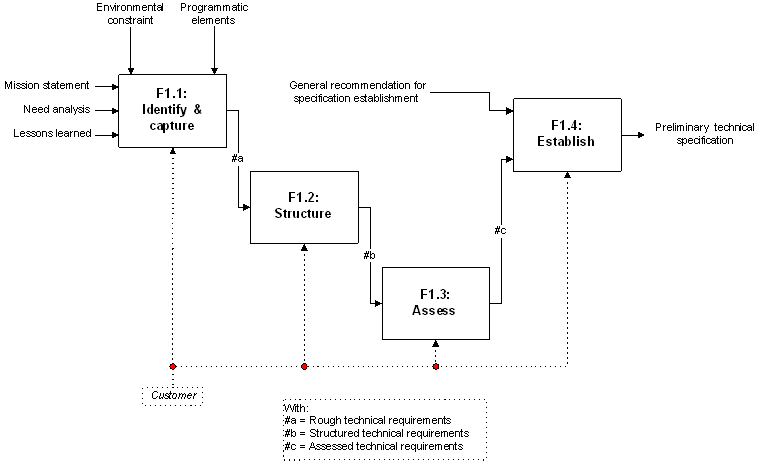 Figure 51: Process to establish the preliminary TS in Phase 0
Where:
The F1.1 task: The customer identifies and captures the user’s needs or mission statements, associated environments and constraints. He expresses these in terms of technical requirements;
The F1.2 task: The customer structures, classifies and justifies (see 8.1.1) individual technical requirements;
The F1.3 task: The customer assesses the entire set of technical requirements for correctness, consistency and suitability for the intended use;
The F1.4 task: The customer establishes the preliminary TS and releases it.
The second step consists of the exploration among the different possible concepts ensuring the conformity to the defined needs, then the selection of one concept, and results in the TS. This version is progressively drafted from the preliminary TS and takes into account the induced constraints from the possible concepts. Figure 52 illustrates this process.
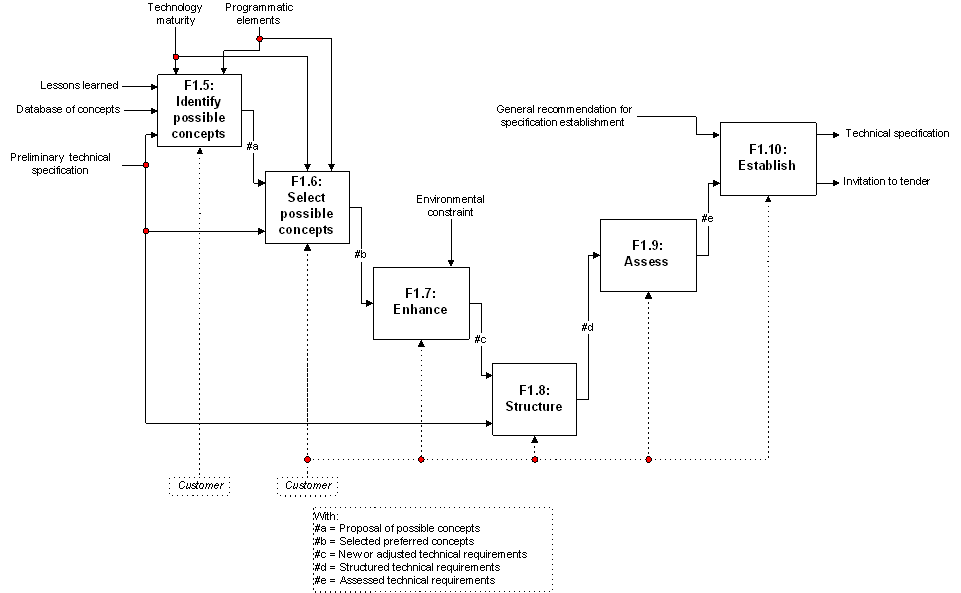 Figure 52: Process to establish the TS in phase A
Where:
The F1.5 task: The customer reviews the preliminary TS, identifies and proposes possible concepts;
The F1.6 task: The customer evaluates and selects preferred concepts;
The F1.7 task: The customer identifies the need for changes to the preliminary TS taking into account the limitations and possibilities induced by the selected preferred concepts. Then, he expresses the adjusted or new individual technical requirements;
The F1.8 task: The customer structures, classifies and justifies (see 8.2.1) the individual technical requirements;
The F1.9 task: The customer assesses the entire set of technical requirements for correctness, consistency and suitability for the intended use;
The F1.10 task: The customer establishes the TS and releases it.
The process described is applicable at each decomposition level where the solution to be developed is chosen (e.g. for establishing a system level specification, or a lower level specification).
The outcome of this process, the technical requirements specification (TS), is a set of technical requirements to be issued by the customer and to be included in the business agreement for the development.
The customer, as a result of the negotiation of the business agreement with the supplier, can decide to update a few elements of his TS (as of other requirements specifications attached to the business agreement). This updated TS is then included in the business agreement for the next phase. In conformance with ECSS-M-ST-10, this update is typically done as a result of the SRR.
Technical requirements types
General
The management of the technical requirements is based upon recognition of the attributes of these technical requirements.
Identification of types of technical requirements
Introduction
The differing types of technical requirements contained in the TS are as follows
functional requirements,
mission requirements,
interface requirements,
environmental requirements,
operational requirements,
human factor requirements,
(integrated) logistics support requirements,
physical requirements,
product assurance (PA) induced requirements,
configuration requirements,
design requirements,
verification requirements.
These different technical requirements are called “user related functions” and constraints in EN 1325-1.
Functional requirements
Requirements that define what the product shall perform, in order to conform to the needs / mission statement or requirements of the user.
For example: “The product shall analyse the surface of Mars and transmit the data so that it is at the disposal of the scientific community”.
requirements
Requirements related to a task, a function, a constraint, or an action induced by the mission scenario.
For example: “The product shall be designed to be put in its final position after a transfer duration shorter than 90 days”.
Interface requirements
Requirements related to the interconnection or relationship characteristics between the product and other items.
- 1 This includes different types of interfaces (e.g. physical, thermal, electrical, and protocol).
- 2 For example: “The product shall dialogue with the ground segment using telemetry”.
Environmental requirements
Requirements related to a product or the system environment during its life cycle; this includes the natural environments (e.g. planet interactions, free space and dust) and induced environments (e.g. radiation, electromagnetic, heat, vibration and contamination).
For example: “The product shall operate within the temperature range from 30 ºC to 50 ºC”.
Operational requirements
Requirements related to the system operability.
- 1 This includes operational profiles and the utilization environment and events to which the product shall respond (e.g. autonomy, control and contingency) for each operational profile.
- 2 For example: “The product shall be designed to accept control of the viewing function from the ground segment”.
Human factor requirements
Requirements related to a product or a process adapted to human capabilities considering basic human characteristics.
- 1 This includes the following basic human capability characteristics:
- decision making,
- muscular strength, coordination and craftsmanship,
- body dimensions,
- perception and judgement,
- workload, and
- comfort and freedom from environmental stress.
- 2 For example: “The product shall display the information with no more than two windows on the screen at the same time”.
(Integrated) logistics support requirements
Requirements related to the (integrated) logistics support considerations to ensure the effective and economical support of a system for its life cycle.
- 1 This includes the following subjects:
- the constraints concerning the maintenance (e.g. minimum periodicity, intervention duration, infrastructure, tooling, intervention modes),
- packaging, transportation, handling and storage,
- training of product users,
- user documentation,
- implementation of the product at the user’s site, and
- reuse of the product or its elements.
- 2 For example: “The product shall be designed to be installed at the customer’s site within two days”.
Physical requirements
Requirements that establish the boundary conditions to ensure physical compatibility and that are not defined by the interface requirements, design and construction requirements, or referenced drawings.
- 1 This includes requirements related to mechanical characteristics, electrical isolation and chemical composition (e.g. weight and dimensional limits).
- 2 For example: “The product shall have a mass of (30 0,1) kg”.
Product assurance (PA) induced requirements
Requirements related to the relevant activities covered by the product assurance.
This can include the following subjects:
- Reliability, availability, maintainability,
- Safety, and
- Quality assurance.
Configuration requirements
Requirements related to the composition of the product or its organization.
For example: “The product shall have 7 power modules with 2 power outlets per engine”.
Design requirements
Requirements related to the imposed design and construction standards such as design standards, selection list of components or materials, interchangeability, safety or margins.
For example “The receiver shall use a phaselock loop (PLL)”.
Verification requirements
Requirements related to the imposed verification methods, such as compliance to verification standards, usage of test methods or facilities.
For example: “The thermal balance test shall be performed using solar illumination”.
Overall Requirements for technical requirements specifications
Overview
In the perspective of the customer – supplier relationship, these requirements are imposed by the customer on the supplier of the product for the production of lower level specifications.
However, it is recommended that the customer also applies them in its internal process of producing technical requirements specifications.
Requirements for technical requirements specifications
General
Technical requirements shall be formulated as defined in clause 8.
The DRD for the TS is shown in Annex A.
The specification shall be identifiable, referable and related to a product or a system.
Responsibility
An entity shall be identified to be responsible for the specification.
The responsible entity of the specification shall define the content and format of the attributes listed in clause 8.
Technical requirements organisation
The technical requirements shall be grouped.
Grouping can be either by type or in accordance with the different situations of the product life cycle.
Each technical requirement shall be separately stated.
Abbreviated terms used in requirements shall be defined in a dedicated section of the specification.
The technical requirements shall be consistent (e.g. not in conflict with the other requirements within the specification).
The technical requirements shall not be in conflict with the other requirements contained in business agreement documents.
Technical reference
The specification shall be complete in terms of applicable requirements and reference to applicable documents.
A technical requirement shall not call for more than one technical requirement in an applicable referred document.
The link to an applicable document shall be stated in the technical requirements.
The reference number of the applicable documents cited in the specification shall contain the revision identifier.
Configuration management
The specification shall be under configuration management.
Format
The specification shall be established to be readily exchanged according to the established access policy and rights.
Supplementary information
If a clause is stated to be informative or descriptive, then this clause shall not contain any requirement or recommendation.
Restrictions
Technical requirements specifications shall only include technical requirements and exclude requirements such as cost, methods of payment, quantity required, time or place of delivery.
Requirements for formulating technical requirements
General
In the perspective of the customer-supplier relationship, these requirements are imposed by the customer on the supplier of the product for the production of lower level specifications.
However, it is recommended that the customer also applies them in its internal process of producing technical requirements specifications.
Requirements for the characteristics of a technical requirement of a TS
Performance
Each technical requirement shall be described in quantifiable terms.
If necessary to remove possible ambiguities of a given performance requirement the method used to determine the required performance shall be indicated in the requirement itself.
Justification
Each technical requirement should be justified.
The entity responsible of the technical requirement shall be identified.
The entity responsible of the specification shall define what part of the justification shall be included in the specification as informative material.
The justification of every technical requirement, as well as the entity responsible of the technical requirement, can be collected and recorded in a requirement justification file (see ECSS-E-ST-10 Annex O).
Configuration management and traceability
Each technical requirement shall be under configuration management.
All technical requirements shall be backwardstraceable.
All technical requirements shall be forwardtraceable.
- 1 A technical requirement is traceable when it is possible to trace the history, application, or location of a requirement by means of recorded identification.
- 2 The backward traceability is the process to trace back the source of each requirement to the requirement from which it derives.
- 3 The forward traceability is the process to establish that each level requirement is implemented at the appropriate phase of the design and that all requirements are implemented.
Ambiguity
The technical requirements shall be unambiguous.
Uniqueness
Each technical requirement shall be unique.
Identifiability
A technical requirement shall be identified in relation to the relevant function, product or system.
A unique identifier shall be assigned to each technical requirement.
The unique identifier should reflect the type of the technical requirement.
The unique identifier should reflect the life profile situation.
In general a technical requirement is identified by, for example, a character or a string of characters, a number, or a name tag or hypertext.
Singularity
Each technical requirement shall be separately stated.
Technical requirements are single or separately stated when they are not the combination of two or more technical requirements.
Completeness
A technical requirement shall be selfcontained.
A technical requirement is selfcontained when it is complete and does not require additional data or explanation to express the need.
Verification
A technical requirement shall be verifiable using one or more approved verification methods.
A technical requirement is verifiable when the means to evaluate if the proposed solution meets the requirement are known.
Verification of technical requirements shall be performed in conformance with ECSS-E-ST-10-02.
Tolerance
The tolerance shall be specified for each parameter/variable.
The technical requirement tolerance is a range of values within which the conformity to the requirement is accepted.
Recommendations for the wording of requirements
General format
Technical requirements should be stated in performance or “whatisnecessary” terms, as opposed to telling a supplier “how to” perform a task, unless the exact steps in performance of the task are essential to ensure the proper functioning of the product.
Technical requirements should be expressed in a positive way, as a complete sentence (with a verb and a noun).
Required verbal form
The verbal form “shall” shall be used whenever a provision is a requirement.
The verbal form “should” shall be used whenever a provision is a recommendation.
The verbal form “may” shall be used whenever a provision is a permission.
The verbal form “can” shall be used to indicate possibility or capability.
Format restrictions
List of terms that shall not be used in a TS requirement
- “and/or”,
- “etc.”,
- “goal”,
- “shall be included but not limited to”,
- “relevant”,
- “necessary”,
- “appropriate”,
- “as far as possible”,
- “optimize”,
- “minimize”,
- “maximize”,
- “typical”,
- “rapid”,
- “userfriendly”,
- “easy”,
- “sufficient”,
- “enough”,
- “suitable”,
- “satisfactory”,
- “adequate”,
- “quick”,
- “first rate”,
- “best possible”,
- “great”,
- “small”,
- “large”, and
- “state of the art”.
ANNEX(normative) Technical requirements specification (TS) - DRD
DRD identification
Requirement identification and source document
This DRD is called from ECSS-E-ST-10, requirement 5.2.3.1.b and 5.6.4.a for all technical requirements specifications.
Purpose and objective
The technical requirements specification (TS) establishes the intended purpose of a product, its associated constraints and environment, the operational and performance features for each relevant situation of its life profile, and the permissible boundaries in terms of technical requirements.
The TS expresses frozen technical requirements for designing and developing the proposed solution to be implemented. These technical requirements, to be met by the future solution, are compatible with the intended purpose of a product, its associated constraints and environment, and the operational and performance features for each relevant situation of its life profile.
Expected response
Scope and content
Introductions
The TS shall contain a description of the purpose, objective, content and the reason prompting its preparation.
Applicable and reference documents
The TS shall list the applicable and reference documents in support of the generation of the document.
User’s need presentation
The TS shall present the main elements that characterize the user’s need for developing the product as a background for those requirements that are defined in detail in the dedicated section.
The TS shall put the product into perspective with other related products.
If the product is independent and totally self-contained, i.e. able to match the final user’s need, it should be so stated here.
If the TS defines a product that is a component of a higher tier system, the TS shall recall the related needs of that larger system and shall describe the identified interfaces between that system and the product.
A nonexhaustive checklist of general questions that should be answered at the early stages of the TS is:
- What is the product supposed to do? It is fundamental but critically important to make sure that every actor has a complete understanding of what the product has to do.
- Who is going to use this product? It is important to indicate who is going to use the product, why they are going to use it and for what it is going to be used.
Selected concept / product presentation
The technical specification shall describe the concept, the expected product architecture and the functioning principles on which it is based.
Life profile description
The TS shall list and describe the different chronological situations of the product’s life profile.
- 1 For a spacecraft, the life profile includes:
- AIT related life events
- transportation to launching area;
- conditioning and tests;
- installation on launcher;
- prelaunch phase;
- launching phase;
- self transfer to its operating position;
- inorbit functioning;
- endoflife (e.g. deorbitation).
- 2 An identifier can be associated with each situation in order to be able to link each requirement to at least one situation in which it applies. Such an approach enables sorting and filtering of the requirements per situation.
Environment and constraints description
The TS shall describe the different environments and constraints for each situation in the life profile that the product is expected to encounter.
An identifier can be associated with each product environment in order to be able to link each requirement to at least the worst environment to which it applies. Such an approach enables sorting and filtering the requirements per environment.
Requirements
The TS shall list all the technical requirements necessary for the product to satisfy the user’s needs.
Interfaces requirements can be rolled-out of the TS in form an interface requirement document (IRD), see ECSS-E-ST-10 Annex M.
The technical requirements shall be expressed according to ECSS-E-ST-10-06 clauses 7 and 8.
For instance, for all TS and for each requirement, the following characteristics have been selected:
- identifiability;
- performance and methods used to determine it;
- configuration management;
- traceability;
- tolerance
- verification
Special remarks
None.
Bibliography
|
ECSS-S-ST-00
|
ECSS system – Description, implementation and general requirements
|
|
ECSS-E-ST-10
|
Space engineering – System engineering general requirements
|
|
ECSS-M-ST-10
|
Space project management – Project planning and implementation
|
|
EN 1325-1:1996
|
Value management, value analysis, functional analysis vocabulary — Part 1: Value analysis and functional analysis
|
|
EN 12973:2000
|
Value management
|
|
ISO 9000:2000
|
Quality management systems — Fundamentals and vocabulary
|