
Space product assurance
Vapour phase bioburden reduction for flight hardware
Foreword
This Standard is one of the series of ECSS Standards intended to be applied together for the management, engineering and product assurance in space projects and applications. ECSS is a cooperative effort of the European Space Agency, national space agencies and European industry associations for the purpose of developing and maintaining common standards. Requirements in this Standard are defined in terms of what shall be accomplished, rather than in terms of how to organize and perform the necessary work. This allows existing organizational structures and methods to be applied where they are effective, and for the structures and methods to evolve as necessary without rewriting the standards.
This Standard has been prepared by the ECSS-Q-ST-70-56 Working Group, reviewed by the ECSS Executive Secretariat and approved by the ECSS Technical Authority.
Disclaimer
ECSS does not provide any warranty whatsoever, whether expressed, implied, or statutory, including, but not limited to, any warranty of merchantability or fitness for a particular purpose or any warranty that the contents of the item are error-free. In no respect shall ECSS incur any liability for any damages, including, but not limited to, direct, indirect, special, or consequential damages arising out of, resulting from, or in any way connected to the use of this Standard, whether or not based upon warranty, business agreement, tort, or otherwise; whether or not injury was sustained by persons or property or otherwise; and whether or not loss was sustained from, or arose out of, the results of, the item, or any services that may be provided by ECSS.
Published by: ESA Requirements and Standards Division ESTEC, P.O. Box 299, 2200 AG Noordwijk The NetherlandsCopyright: 2013© by the European Space Agency for the members of ECSS## Change log
|
ECSS-Q-ST-70-56C
|
First issue
|
Introduction
The UN Outer Space Treaty of 1967 sets up the general principles applicable to the exploration and use of outer space. Article IX of the Outer Space Treaty constitutes the primary statement of international law:
“States parties shall pursue studies of outer space, including the Moon and other celestial bodies, and conduct exploration of them so as to avoid their harmful contamination and also adverse changes in the environment of the Earth resulting from the introduction of extraterrestrial matter and, when necessary, adopt appropriate measures for this purpose.”
Harmful contamination in that sense is defined as biological contamination, including organic-constituents, to protect the environment in order to allow future exobiology research. The Committee On Space Research (COSPAR) has established some planetary protection guidelines, based on the Outer Space Treaty. These guidelines impose requirements on spaceflight missions according to target body/mission type combinations.
The objective of this Standard is to ensure that proper procedures for reducing the microbiological contamination on flight hardware are in place to meet the planetary protection constraints.
Scope
This standard specifies procedures for the reduction of microbiological contamination of flight hardware using hydrogen peroxide vapour.
The procedures specified in this standard cover:
Reduction of microbiological contamination on exposed surfaces.
Reduction of microbiological contamination in controlled ambient and vacuum environments.
This standard also specifies requirements for the conditioning of the flight hardware, bioburden reduction cycle development, and equipment to be used for applying a bioburden reduction procedure.
This standard may be tailored for the specific characteristics and constraints of a space project in conformance with ECSS-S-ST-00C.
Normative references
The following normative documents contain provisions which, through reference in this text, constitute provisions of this ECSS Standard. For dated references, subsequent amendments to, or revision of any of these publications do not apply. However, parties to agreements based on this ECSS Standard are encouraged to investigate the possibility of applying the more recent editions of the normative documents indicated below. For undated references, the latest edition of the publication referred to applies.
|
ECSS-S-ST-00-01
|
ECSS system - Glossary of terms
|
|
ECSS-M-ST-40
|
Space project management - Configuration and information management
|
|
ECSS-Q-ST-10-09
|
Space product assurance - Nonconformance control system
|
|
ECSS-Q-ST-70-53
|
Space product assurance - Materials and hardware compatibility tests for sterilization processes
|
|
ECSS-Q-ST-70-55
|
Space product assurance - Microbial examination of flight hardware and cleanrooms
|
|
ECSS-Q-ST-70-58
|
Space product assurance - Bioburden control of cleanrooms
|
|
IEST-STD-CC1246D
|
Institute of environmental science and technology - product cleanliness levels and contamination control program
|
Terms and abbreviated terms
Terms from other standards
For the purpose of this Standard, the terms and definitions from ECSS-S-ST-00-01 apply.
For the purpose of this Standard, the terms and definitions from ECSS-M-ST-40, ECSS-Q-ST-70-01, ECSS-Q-ST-70-55 and ECSS-Q-ST-70-58 apply, and in particular the following:
Bioburden
Bioburden reduction
Cleanliness level
Product item
Terms specific to the present standard
biological indicators
viable microorganisms providing a defined resistance to a specific process
The process is a hydrogen peroxide bioburden reduction.
controlled ambient conditions
1000 hPa pressure, temperature from 25 C to 45 C and relative humidity from 3 % to 50 %, as measured at 35 C
controlled vacuum conditions
temperature from 25 C to 45 C and pressure from 1,3 hPa to 13,3 hPa
cycle
sequence of individual steps
For the purpose of this standard, the individual steps are preconditioning, bioburden reduction Ct-value and venting. Each step has associated control and monitoring parameters like time and hydrogen peroxide vapour concentration.
exposed surfaces
internal and external surfaces free for gas exchange
Examples: Free for gas exchange are e.g., exterior surfaces, interior surfaces of boxes with venting holes, surfaces of honeycomb cells, surfaces of the outer and inner plies of multi-layer insulation, open cell foam.
overkill
equivalent to a 12 order of magnitude bioburden reduction
parametric release
declaration that a product is at a certain bioburden level, based on records demonstrating that the process parameters were delivered within specified tolerances
Parametric release can be used for achieving bioburden reduction with heat (temperature and time record sufficient, no need for biological test) but is not acceptable for bioburden reduction using chemicals (biological test for process monitoring is mandatory).
positive control
testing the viability of biological indicators and the quality of the culture medium
Abbreviated terms
For the purpose of this Standard, the abbreviated terms from ECSS-S-ST-00-01 and the following apply:
|
Abbreviation
|
Meaning
|
|
BIs
|
biological indicators
|
|
cfu
|
colony forming unit
|
|
COSPAR
|
Committee on Space Research
|
|
Ct
|
time integrated (hydrogen peroxide) concentration
|
|
ESD
|
electrostatic discharge
|
|
L
|
litre (volume in controlled environment)
|
|
mg
|
milligram (hydrogen peroxide)
|
|
NCR
|
nonconformance report
|
|
sec
|
seconds
|
Nomenclature
The following nomenclature apply throughout this document:
The word “shall” is used in this standard to express requirements. All the requirements are expressed with the word “shall”.
The word “should” is used in this standard to express recommendations. All the recommendations are expressed with the word “should”.
It is expected that, during tailoring, all the recommendations in this document are either converted into requirements or tailored out.
The words “may” and “need not” are used in this standard to express positive and negative permissions respectively. All the positive permissions are expressed with the word “may”. All the negative permissions are expressed with the words “need not”.
The word “can” is used in this standard to express capabilities or possibilities, and therefore, if not accompanied by one of the previous words, it implies descriptive text.
In ECSS “may” and “can” have a complete different meaning: “may” is normative (permission) and “can” is descriptive.
The present and past tense are used in this standard to express statement of fact, and therefore they imply descriptive text.
Principles
It is expected that every project specifies the high level planetary protection requirements (as needed).
For example: for all ESA projects, those requirements are specified in ESSB-ST-U-001.
The following series of ECSS standards describe the processes and procedures to respond to those bioburden requirements:
ECSS-Q-ST-70-57 together with the present standard describe the currently approved bioburden reduction processes, i.e. dry heat and vapour hydrogen peroxide, respectively.
ECSS-Q-ST-70-58 describes how to operate a bioburden controlled environment, like a cleanroom, for the assembly and testing of bioburden controlled flight hardware.
ECSS-Q-ST-70-55 describes how to measure the biological contamination on flight hardware and in bioburden controlled environments.
ECSS-Q-ST-70-53 describes how to evaluate the material compatibility with different bioburden reduction processes.
The activities related to hydrogen peroxide bioburden reduction are shown in Figure 41. The related requirements are captured in clause 5. The process can be summarized as follows:
The customer issues a “bioburden reduction specification” used as an input for the supplier “work proposal for bioburden reduction”.
Subject for customer approval the supplier prepares and performs the process taking as inputs the hardware requiring bioburden reduction, the quality requirements and the work proposal (output of the previous activity).
Then the supplier will record and produce a report by comparing the results against the work proposal for bioburden reduction.
Background information for using biological indicators can be found in ISO 11138.
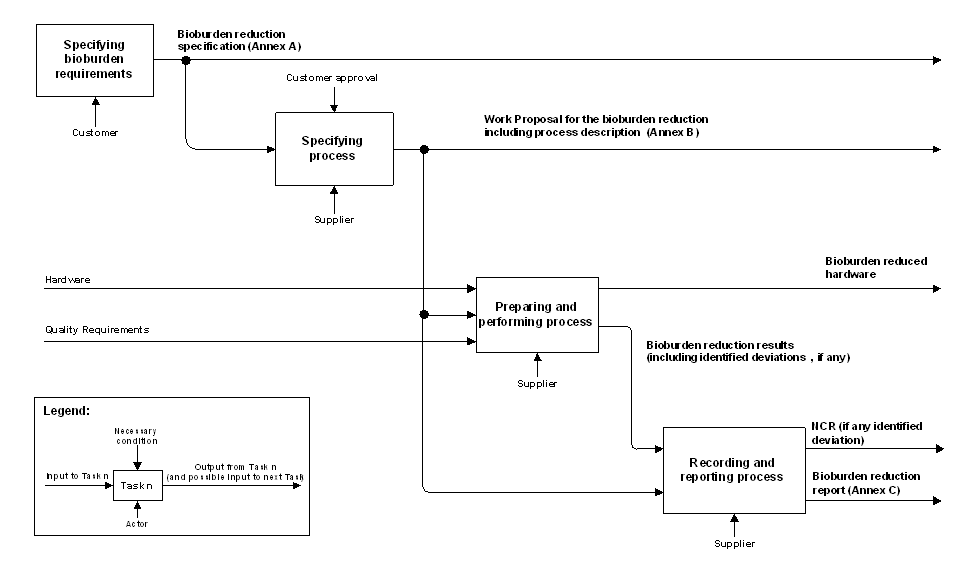 Figure 41: Hydrogen peroxide bioburden reduction process overview
Requirements
General requirements
The bioburden reduction agent shall be hydrogen peroxide vapour.
The customer shall provide a hydrogen peroxide bioburden reduction specification in conformance with the DRD in Annex A.
The supplier shall provide a hydrogen peroxide bioburden reduction proposal in conformance with the DRD in Annex B for the customer approval.
Upon approval by the customer, the supplier shall implement the hydrogen peroxide bioburden reduction.
The supplier shall provide a hydrogen peroxide bioburden reduction report in conformance with the DRD in Annex C.
Product requirements
Product compatibility with process
ECSS-Q-ST-70-53 shall be used to evaluate product compatibility with hydrogen peroxide bioburden reduction.
Product cleanliness
The product to be bioburden reduced shall have a measured particulate and molecular cleanliness level of ≤ 300A, in conformance with requirements from the IEST-STD-CC1246D, before the bioburden reduction process is applied.
The bioburden of the product shall be measured in conformance with requirements from the ECSS-Q-ST-70-55 before the bioburden reduction process is applied.
Product packaging
The packaging, if present at the time of bioburden reduction, shall be compatible with the bioburden reduction process.
Pay attention to pressure changes during the bioburden reduction process.
The packaging shall be compatible with the cleanliness levels of the product as defined by the customer in the Request for hydrogen peroxide bioburden reduction in conformance with the DRD in Annex A.
The packaging shall maintain the bioburden level of the product until it is used.
Product release
Labelling to identify products that have been exposed to a bioburden reduction process shall be used.
Release of a product shall be subject to a no-growth result of the BIs used for process monitoring.
In contrast to dry heat bioburden reduction, hydrogen peroxide bioburden reduction is not a process with parametric release. BIs are used to confirm the process efficacy.
Positive controls shall be used to ensure that the BIs and the growth medium used for the bioburden reduction process control are in good order.
The BIs used for process monitoring shall be viable spores of Bacillus stearothermophilus, culture collection reference DSM 5934 or ATCC 7953, within the stated expiration date.
The BIs shall be exposed the same way the product is exposed.
If the product has no barrier the BIs need to be also used without barrier and vice versa.
The amount of colony forming units on the BIs used for the monitoring for processes specified in the requirements from the clause 5.3.1.1 and clause 5.3.1.2 shall be at the same level as the required bioburden reduction level.
Quantification is performed either according to the documentation of the supplier of the BI or biological assay of the user.
The amount of colony forming units on the BIs used for the monitoring for processes specified in the requirements from the clause 5.3.1.3 shall be 108 cfu before the bioburden reduction application.
Quantification is performed either according to the documentation of the supplier of the BI or biological assay of the user.
Process requirements
Procedure requirements
Procedure for controlled ambient environment
Procedure for controlled ambient environment shall be used for a 2 to 6 order of magnitude bioburden reduction.
A 2 to 6 order of magnitude reduction is achieved by multiplying the respective D-value in requirement 5.3.1.1c by a factor of 2 to 6, respectively.
The hydrogen peroxide vapour concentration for surface bioburden reduction under controlled ambient conditions shall be 1,1 mg/L.
D-value for surface bioburden reduction under controlled ambient conditions shall be 200 (mg/L)sec.
Example: to calculate the Ct-value necessary for a 5 order of magnitude bioburden reduction in a controlled ambient environment, the D-value in requirement 5.3.1.1c is multiplied by a factor of 5, i.e. 200 (mg/L)sec time 5 = 1000 (mg/L)sec.
Procedure for controlled vacuum environment
Procedure for controlled vacuum environment shall be used for a 2 to 6 order of magnitude bioburden reduction.
A 2 to 6 order of magnitude reduction is achieved by multiplying the respective D-value in requirement 5.3.1.2c by a factor of 2 to 6, respectively.
The hydrogen peroxide vapour concentration for surface bioburden reduction under controlled vacuum conditions shall be from 0,5 mg/L to 1,1 mg/L.
D-value for surface bioburden reduction under controlled vacuum conditions shall be 200 (mg/L)sec.
Example: to calculate the Ct-value necessary for a 5 order of magnitude bioburden reduction in a controlled vacuum environment, the D-value in requirement 5.3.1.2c is multiplied by a factor of 5, i.e. 200 (mg/L)sec time 5 = 1000 (mg/L)sec.
Procedure for overkill
Procedure for overkill shall be used under controlled ambient conditions.
The hydrogen peroxide vapour concentration for surface bioburden overkill under controlled ambient conditions shall be from 6 mg/L to 8,6 mg/L.
Ct-value for surface bioburden overkill under controlled ambient conditions shall be 14000 (mg/L)sec.
The bioburden on the product after applying the bioburden overkill procedure is considered zero.
Bioburden reduction cycle requirements
The hydrogen peroxide vapour concentration and the placement of BIs shall be in locations on the product for which it is most difficult to achieve the specified procedure values.
Sensors to measure the hydrogen peroxide concentration can be paired up with the BIs, i.e. so there are always both methods for verifying the efficacy of the cycle.
The time for starting the time-integration of the hydrogen peroxide vapour concentration shall be after the required minimum concentration specified in the requirements from the clause 5.3.1 is reached in the locations selected in the requirement 5.3.2a.
A performance qualification, including physical and microbiological, of the system used for bioburden reduction shall be performed and demonstrate that the system performs in accordance with the bioburden reduction procedure and cycle requirements.
Equipment requirements
The provider of the bioburden reduction service shall demonstrate that the equipment has been installed according to the manufacturer’s specifications.
For more details on installation and operational qualification see chapter 9 in ISO 20857.
The provider of the bioburden reduction service shall demonstrate that the equipment operates according to design specifications.
The provider of the bioburden reduction service shall demonstrate that the installation and operational qualifications are valid for the activities duration.
Support structures for the product shall be designed and used to allow uniform distribution of the hydrogen peroxide vapour.
Support structures are usually racks and holders.
The equipment shall include instrumentation to monitor, control and record the following process parameters:
- Temperature
- Time
- Equipment pressure and airflow
- Humidity, if applicable
- Hydrogen peroxide vapour concentration
Instrumentation used to monitor the process parameters shall be calibrated.
Details of calibration shall be recorded.
Instrumentation used to monitor the process parameters shall be only used within the valid range and time period of the calibration.
Any nonconformance shall be recorded in an NCR in compliance with requirements from the clause 5.1 of the ECSS-Q-ST-10-09.
NCR shall be processed in conformance with requirements from ECSS-Q-ST-10-09.
ANNEX(normative)Hydrogen peroxide bioburden reduction specification - DRD
DRD identification
Requirement identification and source document
This DRD is called from ECSS-Q-ST-70-56, requirement 5.1b.
Purpose and objective
The purpose of the specification is to request a service to reduce the bioburden of a product. This specification describes the product, constraints to be met during the processing of the product and the bioburden levels that need to be achieved at the end of the bioburden reduction process. The specification is written by the customer, which is usually the owner of the product.
Expected response
Scope and content
The hydrogen peroxide bioburden reduction specification shall include:
- Objective of the bioburden reduction.
- Identification and description of the product that has to undergo a bioburden reduction.
- Expected start and end bioburden levels.
- Identification of selected bioburden reduction procedure in conformance with requirements from the clause 5.3.1 and the Ct-value to be used.
- Identification of any pre-conditioning necessary for the product.
- Identification of any particular or molecular contamination control necessary before, during and after the bioburden reduction process is applied.
- Identification of any bioburden recontamination control necessary for the product before, during and after the bioburden reduction process is applied, including packaging.
- Locations to measure the hydrogen peroxide vapour concentration on the product.
- Expected release of volatiles from the product during the bioburden reduction process application.
- Specification of the packaging materials and related procedures
To fulfil this requirement pay attention to ESD issues.
- Deliverables.
- Quality standards.
Special remarks
None.
ANNEX(normative)Hydrogen peroxide bioburden reduction proposal - DRD
DRD identification
Requirement identification and source document
This DRD is called from ECSS-Q-ST-70-56, requirement 5.1c.
Purpose and objective
The purpose of the proposal is to describe a bioburden reduction process for a product. It is written by a supplier of a bioburden reduction service and is the response to a bioburden reduction specification.
Expected response
Scope and content
The proposal for hydrogen peroxide bioburden reduction shall include:
- Bioburden reduction procedure planned to be used.
- List and description of equipment planned to be used for applying and controlling the bioburden reduction process.
- Product specific cycle development.
- Pre-conditioning for the product.
- Particular and molecular contamination control before, during and after the bioburden reduction process is applied.
- Bioburden recontamination control for the product before, during and after the bioburden reduction process is applied.
- The hydrogen peroxide bioburden reduction cycle, including conditioning, bioburden reduction Ct-value as specified by the procedure used in conformance with requirements from the clause 5.3.1, venting, and set points for the control of the cycle.
To fulfil this requirement it can be necessary to perform some tests with a geometrically and material representative model, equipped with hydrogen peroxide sensors and BIs, under the same conditions as planned for the flight hardware bioburden reduction.
- Locations on the product for which it is most difficult to achieve the conditions specified in the procedures in conformance with requirements from the clause 5.3.2.
- The loading pattern of the equipment.
- Loading pattern specific locations to measure process parameters.
- 1 Typical process parameters to control the cycle are hydrogen peroxide vapour concentration, temperature, humidity, and pressure.
- 2 Any copper or cellulose in the load can cause difficulties in maintaining the concentration.
- Values for process parameters and their tolerances to control the bioburden reduction cycle.
Proper monitoring and documentation is necessary to allow release of the product, see clause 5.2.4.
- The equipment used for bioburden reduction.
- The purity of the air or other gases used in the process.
- Environmental conditions and control of the equipment.
This includes any level of particulate or molecular contamination control, filtrations systems, use of forced air flow with direction and velocity, use of pumps, pressure level.
- Deliverables.
- Quality standards.
Special remarks
None.
ANNEX(normative)Hydrogen peroxide bioburden reduction report - DRD
DRD identification
Requirement identification and source document
This DRD is called from ECSS-Q-ST-70-56, requirements 5.1e.
Purpose and objective
The purpose of the report is to document the bioburden reduction of a product. It is written by the supplier of a bioburden reduction service.
Expected response
The proposal for hydrogen peroxide bioburden reduction shall include:
- Description of the product.
- Bioburden procedure and Ct-value used.
- Description of bioburden reduction cycle, including raw and processed monitoring and control parameters, conditioning, bioburden reduction Ct-value as specified by the procedure used in conformance with requirements from the clause 5.3.1, venting, and set points for the control of the cycle.
- Start and end bioburden levels.
- Results of the analysis of the bioburden reduction service, to identify the locations on the product for which it is most difficult to achieve the conditions specified in the procedures in conformance with requirements from the clause 5.3.2.
- The loading pattern of the chamber.
- Loading pattern specific locations to measure process parameters.
- Values for process parameters and their tolerances to control the bioburden reduction cycle.
- The purity of the air or other gases used in the process.
- Environmental conditions and control of the equipment.
- Description of equipment for bioburden reduction.
- Calibration records for all the equipment.
- BIs certificate of performance.
- Particular or molecular contamination control used before, during and after the bioburden reduction process.
- Bioburden recontamination control used before, during and after the bioburden reduction process.
- Documented installation qualification.
- Documented operational qualification.
- Documented maintenance records.
- Documented performance qualification.
- Description of nonconformance or deviations.
- Applied quality standards.
- Description and resolution of nonconformances.
Special remarks
None.
Bibliography
|
ECSS-S-ST-00
|
ECSS system - Description, implementation and general requirements
|
|
ESSB-ST-U-001 Issue 1
|
ESA planetary protection requirements
|
|
ISO 11138:2006
|
Sterilization of health care products - Biological indicator systems
|
|
ISO 20857:2010
|
Sterilization of health care products - Dry heat - Requirements for the development, validation and routine control of a sterilization process for medical devices
|